Security beyond defence: why Vanuatu should have a national climate security plan

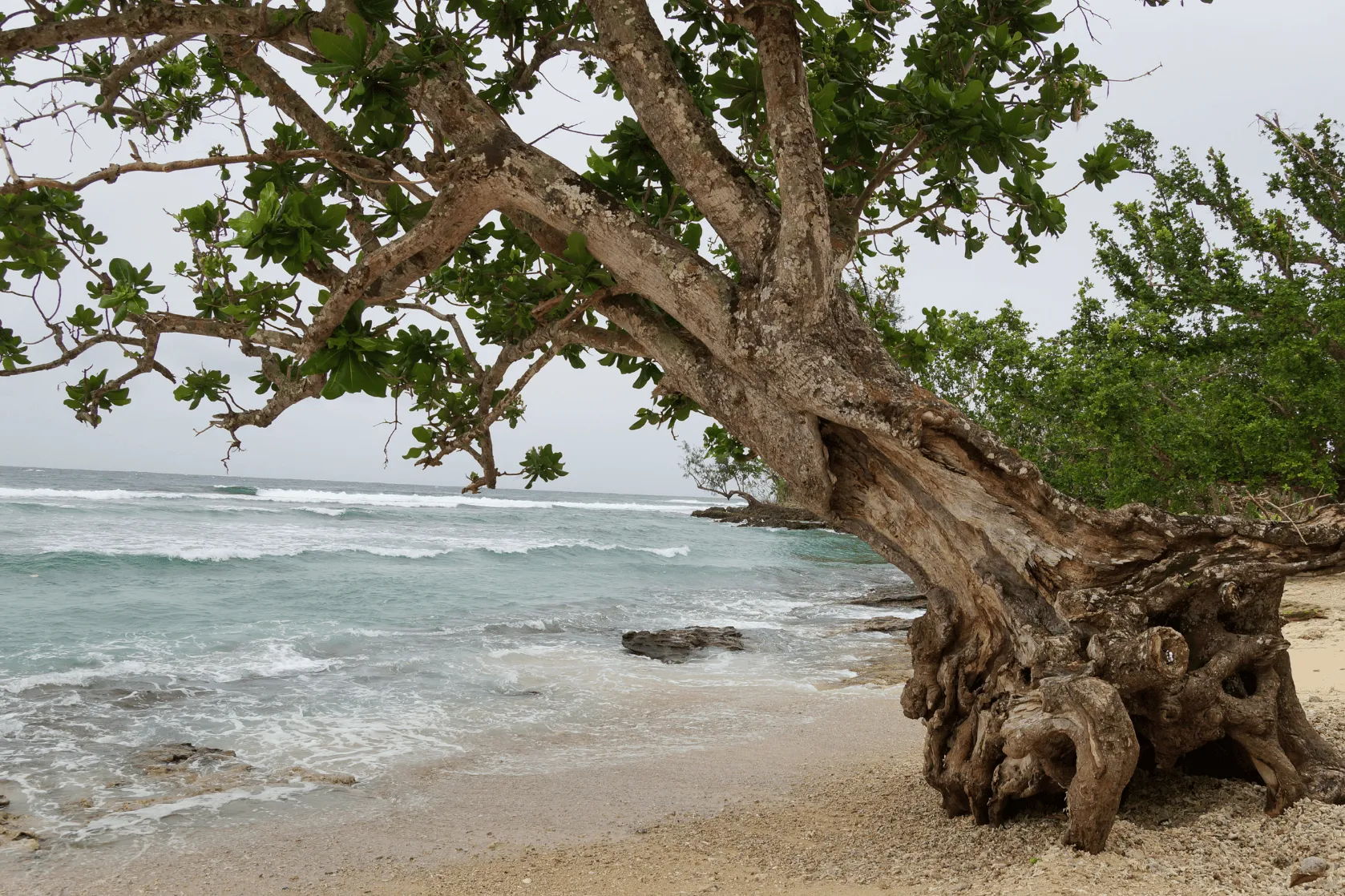
Vanuatu is experiencing severe impacts of climate change, including coastal erosion and rising sea levels. Photo: Pacific Security College
In Vanuatu, security can no longer be defined solely through traditional notions of defence and law enforcement. The country’s long-term stability increasingly depends on its capacity to adapt to climate change, protect vulnerable communities, and strengthen resilience at both national and local levels.
Vanuatu has had a national security strategy since 2022, which traditionally focuses on state-centred security concerns. Yet in Vanuatu’s context, climate change increasingly shapes national security outcomes by intensifying natural hazards, disrupting economic activity, placing pressure on critical resources, and threatening the long-term viability of coastal communities.
While several national frameworks – including the Climate Change and Disaster Risk Reduction (CCDRR) Policy 2022-2030, the Vanuatu National Adaptation Plan and sectoral policies on food and water security – address aspects of these challenges, they operate largely within separate policy domains. As a result, climate-related risks are often managed through fragmented approaches rather than through an integrated national security lens.
A stand-alone national climate security plan is needed to focus attention and harness resources towards the country’s biggest security threat.
Climate change as a threat multiplier
Climate change intensifies existing social and economic vulnerabilities across Vanuatu, posing broader risks to national stability and development trajectories.
The country has experienced increasingly severe tropical cyclones, prolonged droughts, coastal erosion and rising sea levels. Disasters such as tropical cyclones Pam in 2015, Harold in 2020, and the unprecedented twin cyclones Judy and Kevin in 2023 illustrate how climate-related events can overwhelm national systems and reverse development gains.
For example, the total economic impact of Tropical Cyclone Pam was estimated at approximately VT48.6 billion (US$449.4 million), accounting for both physical damage and economic loss. This represented 64.1% of Vanuatu’s gross domestic product (GDP), highlighting the immense scale of the disaster’s impact on the national economy.
Previously in my capacity as Director for Climate Change, I observed the extent to which climate-related loss and damages strain government response capacity. Over time, this repetitive pattern of damage, response and rebuilding has contributed to economic instability and reinforces structural dependence on external humanitarian support.
How a climate security plan could make a difference
Strengthening climate security requires coordinated national policies, community-driven adaptation strategies, and sustained regional and international cooperation. A separate strategy focused on climate security would support this by providing a coherent framework that aligns climate change, development planning, environmental management and national security priorities.
Such a strategy would strengthen coordination across government institutions, clarify responsibilities and ensure that emerging climate threats are recognised and addressed as core national security issues rather than isolated sectoral challenges. In doing so, it would better position Vanuatu to manage complex and interconnected risks while safeguarding the country’s long-term resilience, sovereignty and sustainable development.
There are three key areas where a national climate security plan could focus resourcing:
1. Human mobility, relocation and social stability
Climate-induced internal human mobility is increasingly common in Vanuatu as coastal communities seek to relocate to higher ground due to erosion, flooding and storm surges. While relocation improves physical safety, it introduces complex governance and social challenges.
Land in Vanuatu is predominantly held under customary ownership and is deeply linked to identity and cultural heritage. The movement of communities into new areas can place pressure on land arrangements and may trigger disputes between host and relocating communities. Without well-designed relocation governance frameworks, these tensions risk undermining social cohesion and community stability.
Climate change is also accelerating rural-to-urban migration towards Port Vila and Luganville. Rapid urban population growth has contributed to the expansion of informal settlements, where access to employment, housing, water and sanitation is often limited. These pressures increase social inequality and youth unemployment, creating further risks to social stability.
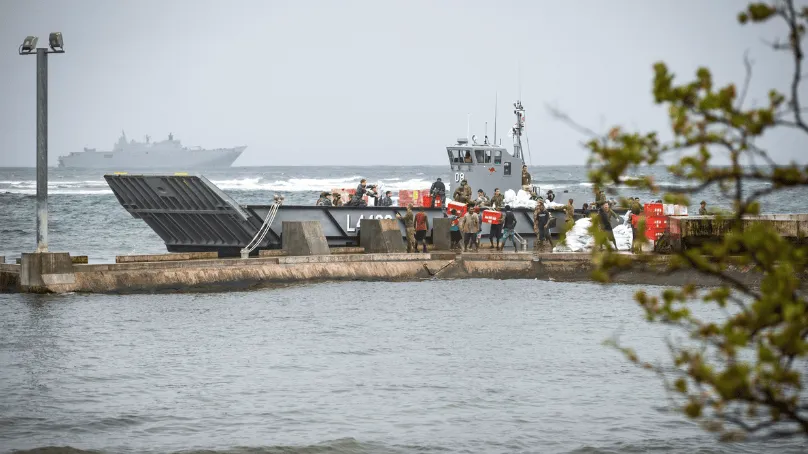
Residents from the island of Tanna unload supplies delivered by the Australian Defence Force following tropical cyclones Judy and Kevin in 2023. Photo: Australian Department of Defence
2. Disaster response and national security capacity
Disaster management is a central pillar of national security in Vanuatu, and places a high burden on national response institutions, including the National Disaster Management Office and sectoral ministries.
Strengthening disaster resilience through early warning systems, resilient infrastructure and local response capacity is therefore not only a humanitarian priority but also a strategic investment in national security.
The country requires hundreds of millions of US dollars annually to address the escalating costs associated with the increasing frequency and intensity of climate-induced disasters. Current estimates suggest climate-related loss and damage now exceed US$500 million per year (approximately VT59 million), underscoring the severe and ongoing economic burden on the nation
3. Customary governance and community leadership
A national climate security plan must centre customary governance systems and community leadership, which provide local security. Chiefs, churches and community organisations play a critical role in managing land, supporting disaster recovery, and maintaining social order and cohesion during crises.
These local systems often provide immediate support during relocation processes, conflict resolution and social protection for vulnerable households. Indigenous knowledge also contributes significantly to climate adaptation practices, including traditional agriculture and natural resource management. Strengthening these community-based approaches represents an “inside-out” security model that integrates local knowledge with formal government systems.
Preparing for the opportunities and challenges ahead
Vanuatu’s experience demonstrates that climate resilience, social cohesion and sustainable development are interconnected pillars of security. As climate risks intensify, the country’s integration of traditional governance, community leadership and modern policy frameworks offers valuable lessons for the Pacific and the global community.
The 30th Conference of the Parties (COP30), held in Belém, Brazil in 2025, reinforced that without meaningful global action, the future stability of nations like Vanuatu is not only a development concern but a fundamental security challenge. Commitments to increase adaptation finance, a key outcome of the meeting, provide important opportunities for Vanuatu to strengthen resilience infrastructure and community adaptation programs.
A dedicated national climate strategy would help the country leverage these opportunities and translate high-level commitments into actionable priorities. It would also reassure communities that the government is proactively mitigating risk for vulnerable populations in the face of the country’s greatest security threat.
Mike Sam Waiwai is studying a Master of Climate Change Policy at the Crawford School of Public Policy at the Australian National University. He previously served as Vanuatu’s Director for Climate Change. His views are his own.
Views expressed via the Pacific Wayfinder blog are not necessarily those of the Pacific Security College. Read our publishing policy.
- Themes:
- Climate change