Security through deeper regionalism: the case for a Pacific Islands Forum Treaty
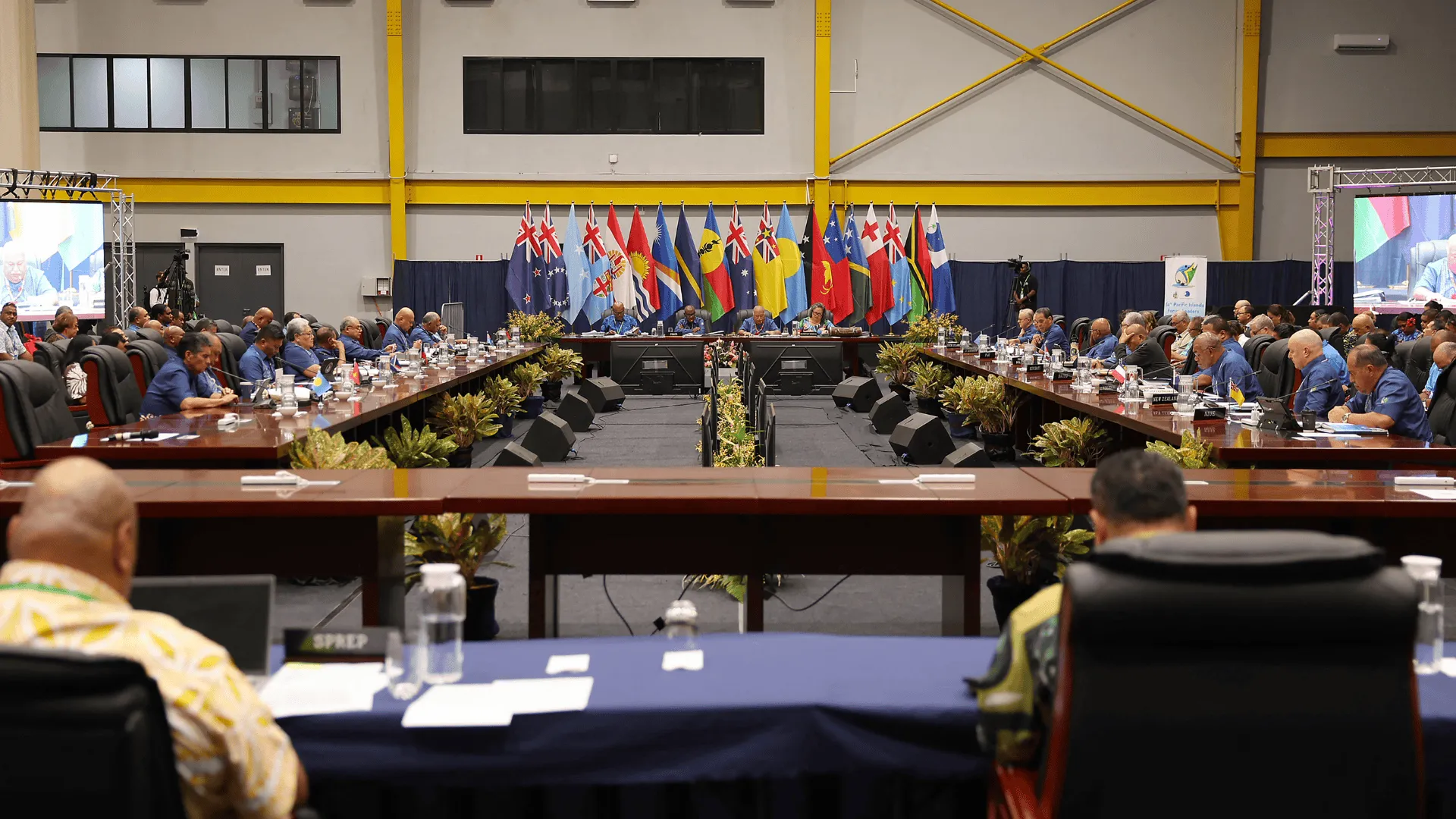
Leaders meet at the Pacific Islands Forum Leaders’ Meeting in Honiara in 2025. Photo: Ben Strang/AFP
Our region faces intersecting existential challenges.
Climate change represents an intrinsic threat to the security of Pacific Islands Forum (PIF) members. Social, health and economic challenges driven by geographic distance and a lack of scale continue.
And the emergence of a more multipolar global system – amid the deterioration of the global rules-based order, as reinforced by recent events in Iran and the wider Middle East – forces members to consider how to navigate a more congested, contested and dangerous world.
Responding to this stark environment compels a closer investigation of how a more integrated region can support PIF members and deliver on the vision of the 2050 Strategy for the Blue Pacific Continent.
We aren’t alone in responding to this deteriorating environment, where rules and norms are increasingly replaced by strategic rivalry, coercive diplomacy and economic fragmentation.
Regions around the world are adapting how they organise and operate, strengthening internal cohesion and developing new mechanisms to protect their interests.
For the Pacific, the next evolutionary step would be to consider the development of treaty-based options to codify Pacific norms and form the basis of a Pacific defined regional rules-based order.
The case for deeper regional integration
Turning the Pacific Way – consensus, respect for sovereignty, peaceful dispute resolution – into a compact treaty or protocol would give the region’s norms diplomatic weight while preserving non‑coercive dispute mechanisms.
ASEAN’s Treaty of Amity and Cooperation (TAC) demonstrates how a region can formalise principles without creating a supranational state.
For partners, an internationally recognised, Pacific developed and driven treaty-level framework would create predictable entry points and set behavioural expectations. This would reduce bilateral fragmentation and ensure external assistance aligns with regional priorities such as climate resilience and ocean governance. The Review of Regional Architecture explicitly flags partner proliferation and calls for clearer coordination.
The Pacific already treats climate change as a security issue. A treaty-level framework could institutionalise collective responses to climate displacement, maritime crime, cyber threats, disaster relief, and the proliferation of illicit drugs. It would extend existing declarations – Biketawa, Boe, Ocean of Peace – into operational commitments.
A unified rules‑based posture also increases bargaining power in multilateral forums and with major powers. This would enable the Pacific to better set terms for access, investment, and security cooperation rather than merely reacting to external offers. In this regard, ASEAN centrality should act as a guide for PIF members.
Considerations for implementation
PIF members would need to carefully consider any steps down this road to deeper regional integration. One would not want to underestimate the potential complexity of bringing the independent states of the Pacific into a binding political/security treaty with Australia, New Zealand, and the French Overseas Territories of New Caledonia and French Polynesia.
Nor should the realities of member division over issues such as climate change and geopolitical competition be discounted.
But these things should not be a stumbling block to deeper regional cohesion and integration, at a time where this may be in the collective and long-term interest.
The idea should be to start small. Decide and be clear on the scope, focusing initially on symbolic norms – prioritising codifying the Pacific Way over creating binding commitments that bring higher risk.
The interests of smaller island states should be central to this work. Any treaty would need to protect their sovereignty while allowing for differentiated implementation and technical assistance for smaller island states, noting their scale.
Building practical cooperation projects or committing to existing Pacific initiatives like the Pacific Resilience Facility would provide demonstrable wins and generate deeper cooperation.
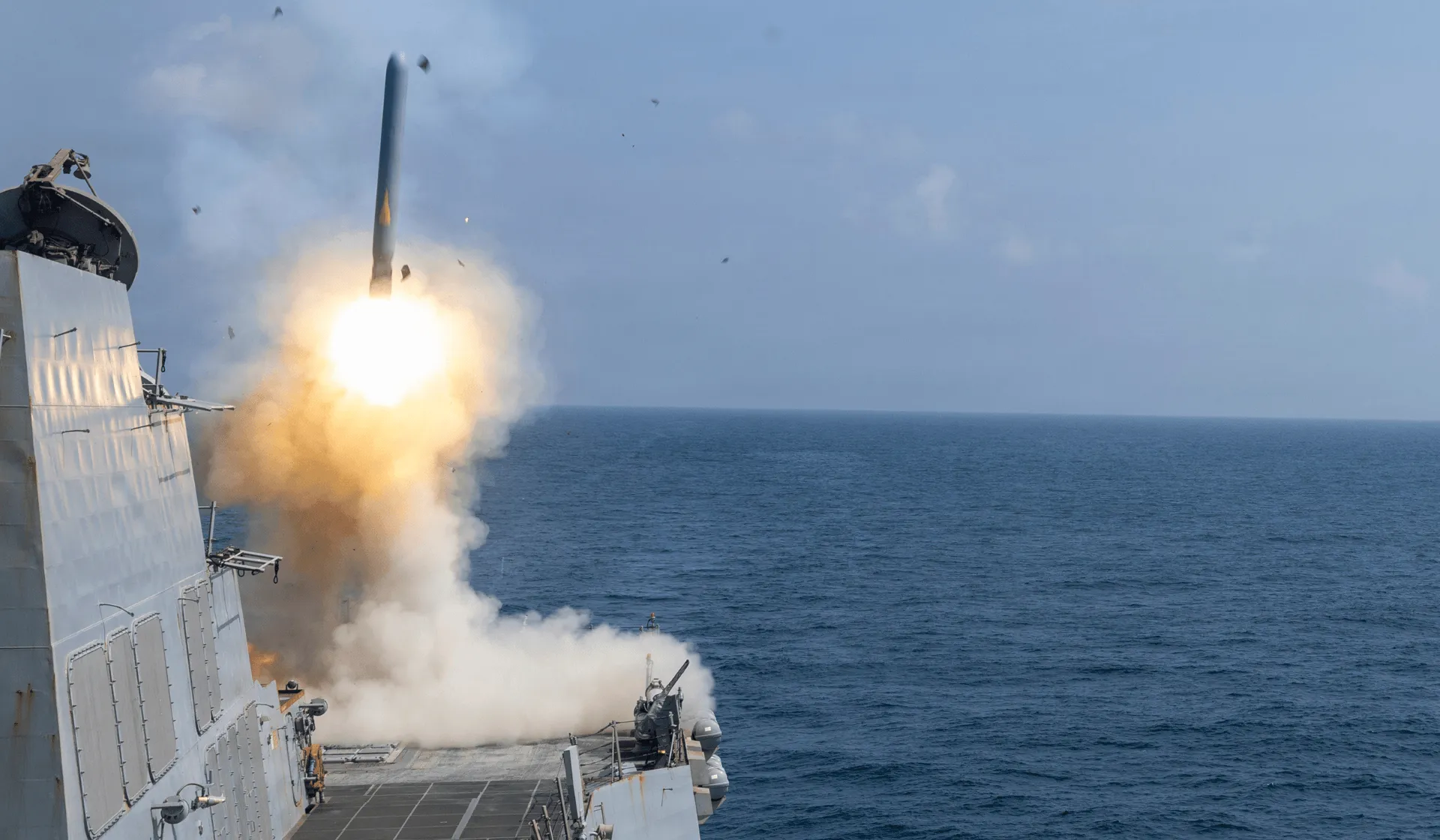
A United States Navy ship fires a missile during Operation Epic Fury. Photo: United States Navy
Regionalism as a response to global disorder
The trend is clear: as global institutions and rules weaken, regionalism becomes the primary arena for stability, cooperation, and rule‑making.
For the Pacific, this moment presents both a challenge and an opportunity. A more defined, Pacific‑driven rules‑based order – potentially anchored in a TAC‑style treaty – could provide the clarity, cohesion, and strategic autonomy needed to navigate an increasingly contested world.
Such a Pacific rules‑based order is feasible if it is Pacific‑designed, incremental, and capacity‑aware. By combining codified norms with flexible implementation and clear partner rules, the region can better protect sovereignty, strengthen collective resilience, and speak with one voice on the issues that matter most.
Paki Ormsby has more than two decades of experience in policy, strategy and security primarily focused on the Pacific region. From 2017 to 2023, Paki was the Director of Policy for the Pacific Islands Forum Secretariat leading the development of regional policy for Pacific Islands Forum Leaders.
Joel Nilon is Senior Pacific Fellow at the Pacific Security College at the Australian National University. He previously served at the Pacific Islands Forum Secretariat for nine years as a Policy Adviser and led the development of the 2050 Strategy for the Blue Pacific Continent.
Views expressed via the Pacific Wayfinder blog are not necessarily those of the Pacific Security College. Read our publishing policy.