The role of Pacific creatives in shaping the climate narrative at COP
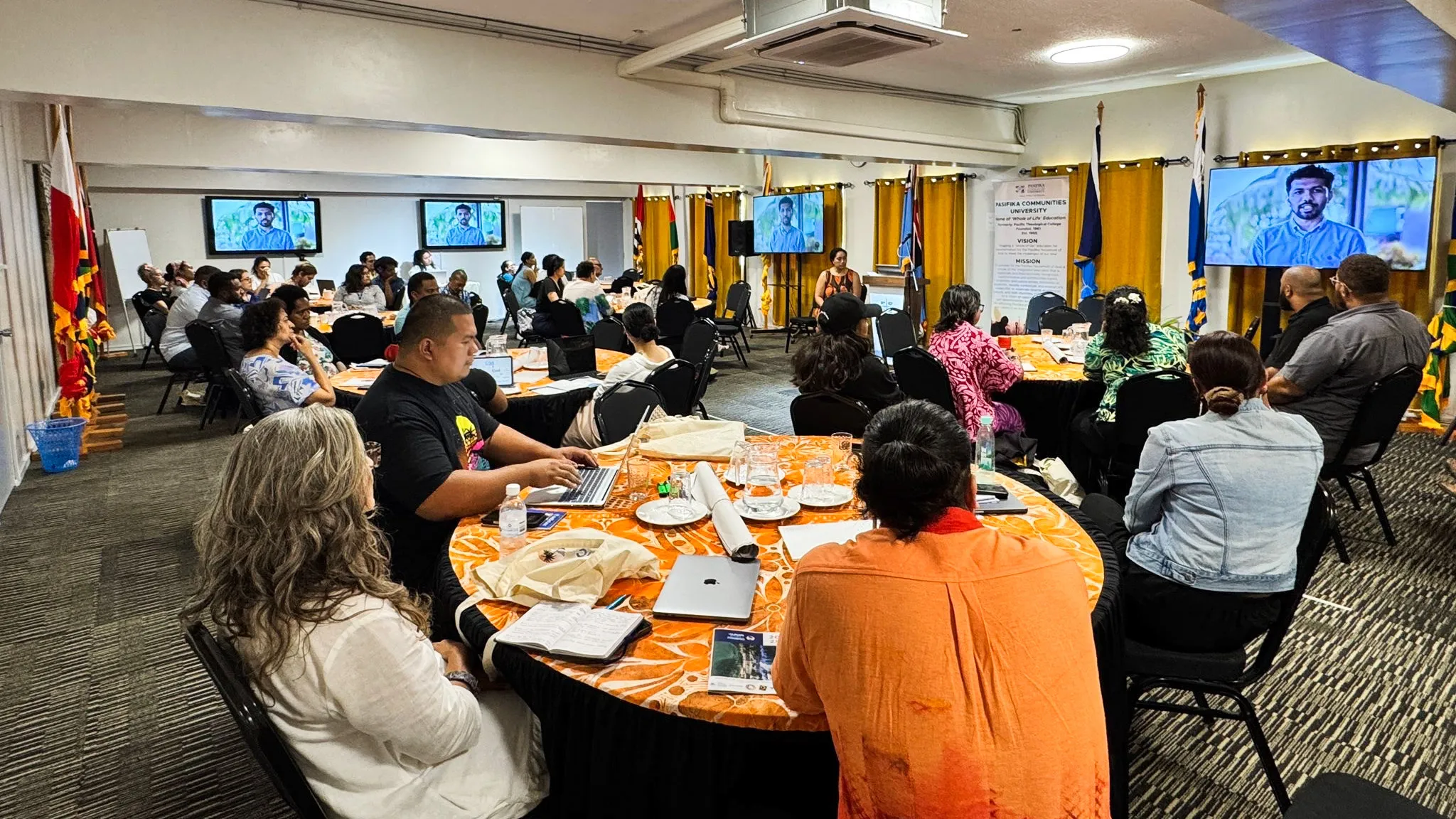
The 2025 Climate Story Lab Pacific brought together creatives and filmmakers from across the region to consider how Pacific-led narratives can shape climate action. Photo: Pasifika Film Fest
On November 19, the years-long negotiation between Australia and Türkiye to host COP31 finally came to an end. Unfortunately for Australia – and the Pacific – Türkiye will host the next Conference of Parties (COP) in 2026.
As part of a deal between the two nations, Australia will lead negotiations as President. It seems the value of this long-awaited arrangement for the Pacific will be revealed in coming months.
Prior to COP30, which took place in Belem, Brazil, excited chatter emerged in creative and activist Pacific spaces about ‘being ready’ and ‘getting ready’ for COP31. Australia’s previous commitment to host COP31 in partnership with Pacific countries prompted discussion of the ways to present the experience of the climate crises from the perspective of the region itself.
Climate Story Lab (CSL) Pacific, an initiative for filmmakers and storytellers held in the region for the first time this year, provided a forum for these stories to be pushed to the forefront.
The lab was a collaboration between Pasifika Film Fest and Doc Society, a global non-profit dedicated to supporting independent documentary production.
Nine projects were selected from Tuvalu, Tahiti, Fiji, Papua New Guinea, Aotearoa New Zealand, Guam, and the Marianas. The teams were flown to the workshop in Suva, Fiji, to develop their projects and pitches. The aim was to strengthen climate storytelling projects from the Pacific, spur partnerships to mobilise strategic audiences and funding opportunities, and grow confidence in the power of social impact storytelling in the region.
CSL Pacific received further support from The Pacific Community (SPC) to bring all nine projects to Sydney to pitch Australian broadcasters and funders for further development and production support.
The teams developed stories about the Pacific legal team that represented the Melanesian Spearhead Group and Vanuatu at the International Court of Justice, and the journey of the women sorting plastic at a Lautoka landfill in Fiji. The Sydney audience heard about Ma’ohi activist Hinano Teavai Murphy and her role in the crusade against deep-sea mining in the Pacific, and master carver Uncle Tony Piailug as he and his team prepare to sail the first traditional canoe voyage from Saipan to Tinian in the Marianas. Stories of the rising tides in Tuvalu and Pam Island, Papua New Guinea, were paired with new media and podcast works, profiling oral histories about climate change.
Lastly, two narrative works: one an apocalyptic look at what happens when Fiji has gone under water, and a dramatic comedy titled COPe, which considered what could happen if Fiji was to host a COP. Given negotiations around a pre-COP31 meeting in the Pacific next year, this is no longer so far-fetched.
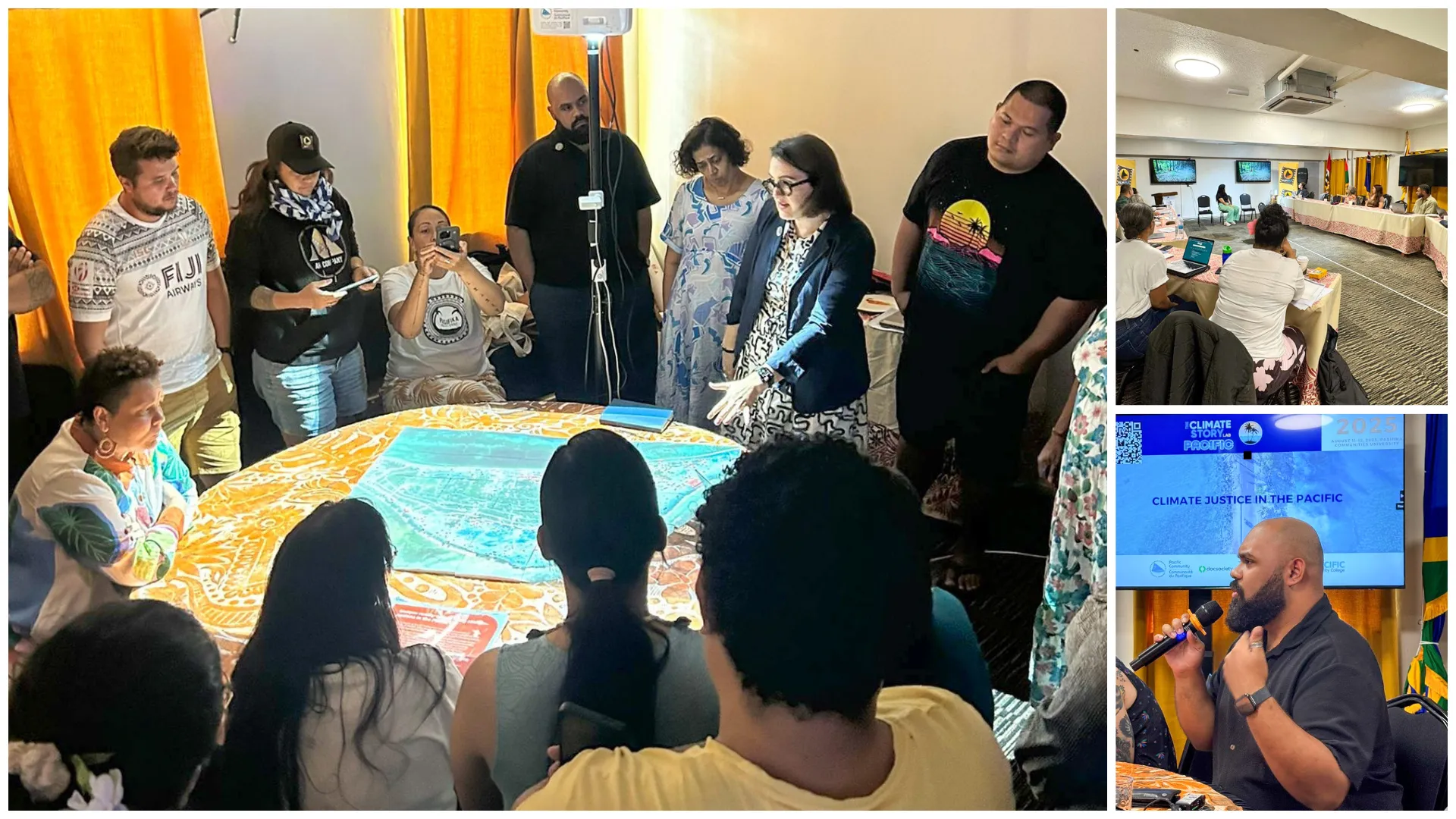
Climate Story Lab was held in the Pacific region for the first time in 2025. Photo: Pasifika Film Fest
As organisation of the next COP gets underway, Pacific-led storytelling can play an important role in redirecting the climate narrative in the region away from vulnerability and towards resilience.
At a negotiations level, it has been argued that the Pacific has historically adopted both framings when dealing with climate change, climate adaptation and climate finance discussions. In seeking support for climate mitigation measures, we are vulnerable. When advocating for action from global powers to adhere to the Paris Agreement or net zero, the Pacific is resilient in the face of the climate crisis.
At the end of the day, the Pacific continues to find innovative ways to demonstrate its resilience. At the story development labs in Suva, SPC showcased its 3D model of the Marshall Islands, which projects the effect of different levels of rainfall on the widest landmass on Majuro. The projections showed that a catastrophic weather event would result in all of this landmass being underwater. When demonstrated by the Marshallese people, this technology and storytelling was a powerful example of a vulnerable community choosing resilience and hope in the face of climate change.
The example of the CSL Pacific project Anchored in Resilience: Life on Pam Island Amid Rising Seas, by PNG writer and director Laurence Korup, couples a documentary about the Pam Island community in Papua New Guinea, currently dealing with rising sea levels, with a social impact campaign to build a sea wall.
Similarly, Caleb Young’s The Plastic Pickers of Paradise documents the journeys of a group of women working at the Lautoka landfill in Fiji and the mistreatment they face in their communities. The documentary is paired with a social impact campaign to unionise the grassroots advocacy group the women established to protect their rights.
These are examples of climate storytelling unmitigated by the agendas of development partners, and remoulding the Pacific climate narrative from a Pacific perspective. Although the bid for COP31 has not gone the way the Pacific and Australia desired, the decision remains an opportunity for Pacific creative and cultural industries to push the stories that illuminate the effects of the climate crisis on communities that have not helped create it.
Climate Story Lab Pacific is a collaboration between Pasifika Film Fest and Doc Society and is proudly sponsored by the Pacific Security College. CSL Pacific took place at Pasifika Communities University in Suva in August, and in Sydney in November.
Dr Eliorah Malifa is a Samoan producer and researcher passionate about creating pathways for Pacific creatives in screen.
Views expressed via the Pacific Wayfinder blog are not necessarily those of the Pacific Security College.
This article is licensed under a Creative Commons Attribution-NonCommercial-NoDerivatives 4.0 International License (CC BY-NC-ND 4.0). Read our publishing policy.