Questioning emerging ‘climate innovations’ in the Pacific

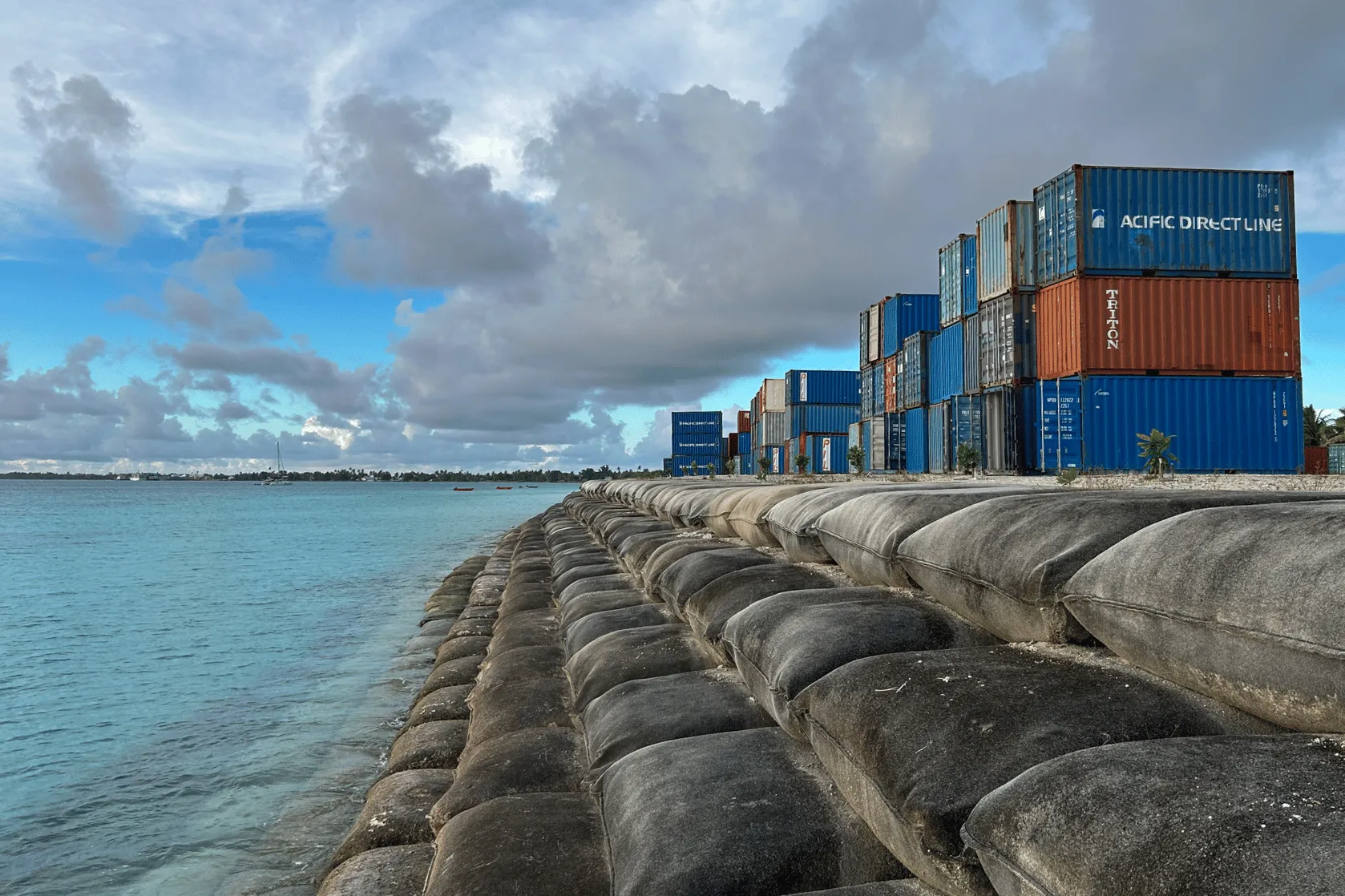
Tuvalu has reclaimed land as part of its Tuvalu Coastal Adaptation Project. Photo: Pacific Security College
Climate innovation is key to the Pacific’s future, but are the current solutions from Nauru and Tuvalu sustainable, writes Dr Lakshmin Mudaliar.
Pasifika leaders have long known that climate change is the single greatest threat to the Pacific. Tropical cyclones have wiped out entire islets, damaged healthcare facilities and impacted GDPs. Coastal inundation has already forced relocation, and rising sea levels are threatening maritime boundaries, sovereignty and identity.
Although the international community has heard countless stories of climate security risks faced by Pasifika communities and households, it has failed to enhance ambition and mitigate the impacts of climate change. This has prompted Pasifika policymakers, researchers and civil society to explore alternative solutions.
Nauru and Tuvalu have both established initiatives to strengthen security, build climate resilience and foster sustainable development. However, before their approaches can be labelled and circulated as ‘climate innovations’ globally, we need to analyse some of their shortcomings, especially as other small island states look to the Pacific for inspiration and solutions.
Citizenship for sale
Nauru’s Economic and Climate Resilience Citizenship Program was launched in 2024 at COP29 in Baku. The Nauruan government is selling its citizenship to raise funds for initiatives in climate adaptation and mitigation, infrastructure development, renewable energy, and economic diversification.
The program offers several benefits for a starting cost of US$105,000. These benefits include a politically neutral passport, no minimum stay restrictions, visa-free access to 89 strategic destinations, and the opportunity to migrate as a family, all while addressing the adverse impacts of climate change. It is reported that 20 individuals have been granted Nauruan citizenship, including a German family.
Although selling citizenship to generate climate and development finance is an appealing idea, the success of these schemes depends on immigrant investment and engagement – neither of which is required under the Nauruan initiative. Research also shows that immigrant investor programs have been used to launder identities and funds in the past. An earlier scheme in the 2000s allegedly led to members of Al Qaeda and the Russian mafia acquiring Nauruan citizenship. This eventually resulted in eligibility restrictions on individuals with criminal offences.
Amid the emergence of artificial intelligence, we must also consider what additional measures can be implemented to ensure the program does not pose risks to neighbouring countries that are still strengthening their migration and border management systems.
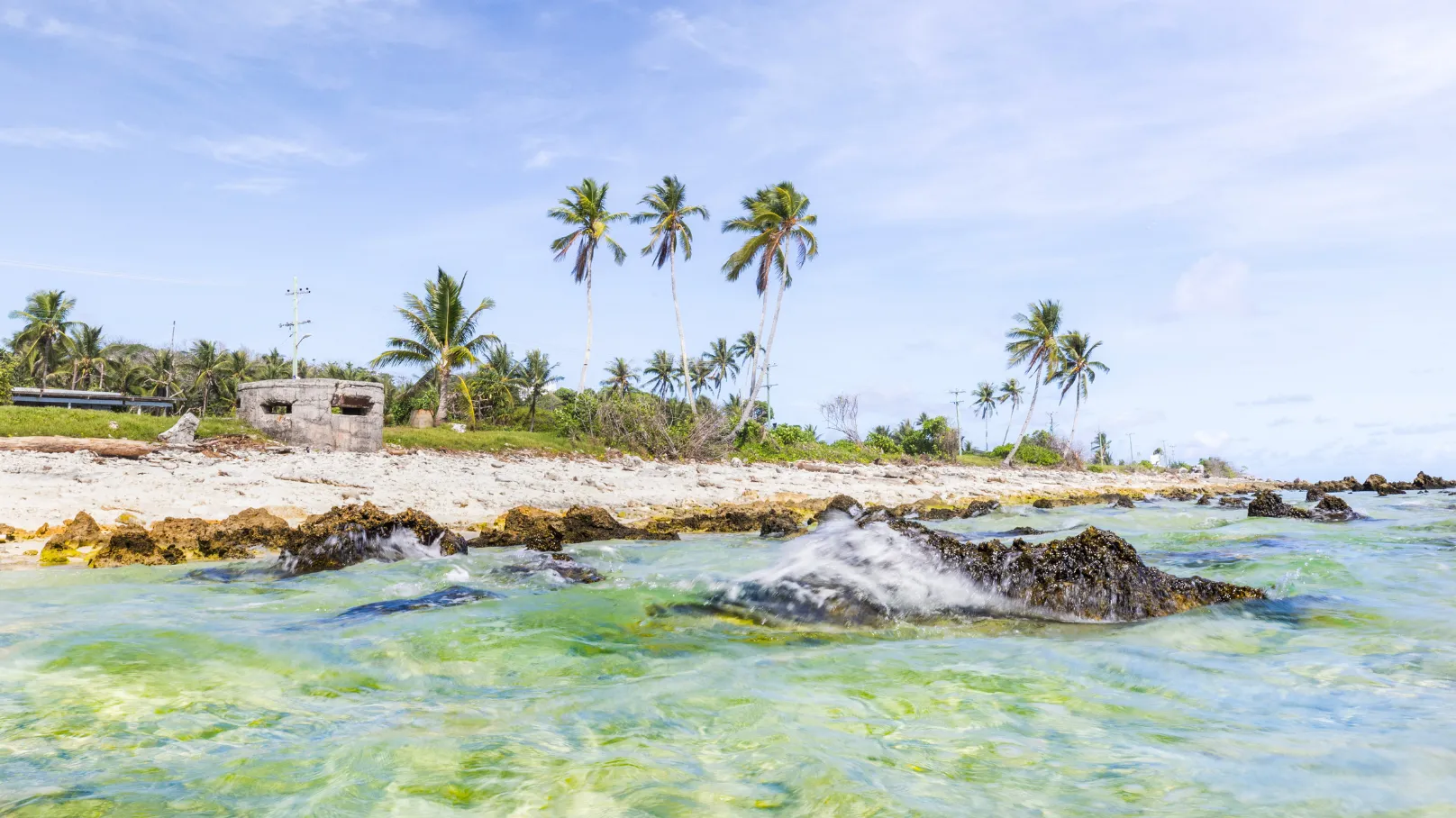
Nauru sells citizenship to fund climate and infrastructure initiatives. Photo: Australian Department of Defence
The rising socio-economic costs of land reclamation
Tuvalu’s Long-Term Adaptation Plan (L-TAP) was launched in 2022 at COP27 in Sharm el-Sheikh. It aims to provide a suite of comprehensive solutions beyond 2100. Through this initiative, the Tuvaluan government is raising land for the staged relocation of Tuvaluans from outer islands to the capital, Funafuti – developing infrastructure, upgrading housing and transportation facilities and improving water supply.
Elevating land reportedly aligns with the Tuvalu Coastal Adaptation Project (T-CAP), which focuses on land reclamation in Fongafale, Nanumanga and Nanumea. Both L-TAP and T-CAP aim to ensure that Tuvalu remains habitable, fostering hope and upholding its citizens’ right to self-determination.
Nevertheless, the environmental sustainability, economic viability, and social acceptance of relocation through land elevation and reclamation projects are not given. For instance, while the United Arab Emirates government’s construction of artificial islands has increased tourism revenue, it has also degraded the marine environment and other natural ecosystems. The dredging has led to the loss of fish species, coral reefs, shells, and oyster beds, while sedimentation has disrupted natural water patterns.
Some research suggests eco-engineering techniques can offset these impacts, but a Malaysian study notes that artificial islands will continue to degrade seagrass beds, impacting marine ecosystems and tourism-dependent livelihoods. Artificial islands are also susceptible to big tsunamis and other sudden-onset disasters. If the methods employed continue to damage the environment, how can land reclamation and elevation initiatives be ecologically sustainable?
The Maldivian government has attempted to implement various permutations of the Safer Island Strategy since 1912, consolidating its population spread across 200 islands onto 10 to 15 islands. However, such consolidation proposals have received negative reactions in the Maldives, due to allegations that they prioritise economic gains and conceal elite interests.
Revitalising population consolidation proposals by couching them in environmental and climate change terms has arguably heightened mistrust within the Maldivian community. Community perspectives matter. We must consider how to enhance community ownership of initiatives that require people to leave their homes.
Caution required
As articulated in the 2050 Strategy for the Blue Pacific Continent, safeguarding the human rights of Pasifika peoples, along with their cultural values, heritage, and traditional knowledge, is vital to regional climate security efforts.
Nauru and Tuvalu have adopted two distinct yet innovative approaches to address climate security challenges: citizenship by investment and internal relocation through land reclamation. These strategies offer promising pathways forward, fostering hope for long-term habitability while enabling communities to continue practising their cultural traditions, values, and knowledge systems.
Nonetheless, earlier permutations of similar initiatives from elsewhere have raised concerns about their long-term viability. If not well evaluated and planned, implementing these strategies could create new economic, environmental and social challenges.
The emergence of artificial intelligence also prompts concerns around the effectiveness of immigration policy settings across the region. These challenges could introduce new national security risks – such as social instability and economic collapse – while exacerbating existing regional threats, including transnational organised crime and human trafficking. They could also undermine regional progress on climate security. Amid the region’s escalating drug crisis, smaller states like Nauru and Tuvalu are at heightened risk of becoming easy targets for drug cartels, largely due to their limited human and infrastructural capacities.
For these reasons, Nauru and Tuvalu’s strategies need to be carefully evaluated and monitored over an extended period before they can truly be circulated as ‘climate innovations’.
Dr Lakshmin Mudaliar is an independent scholar with roots in Fiji, Australia and Aotearoa New Zealand. She holds a PhD in Global Governance and Regulation from the Australian National University. Her research work spans regional mobility, climate change, human rights, and migration governance in the Pacific.
Views expressed via the Pacific Wayfinder blog are not necessarily those of the Pacific Security College. Read our publishing policy.







Great piece Dr. Mudaliar!