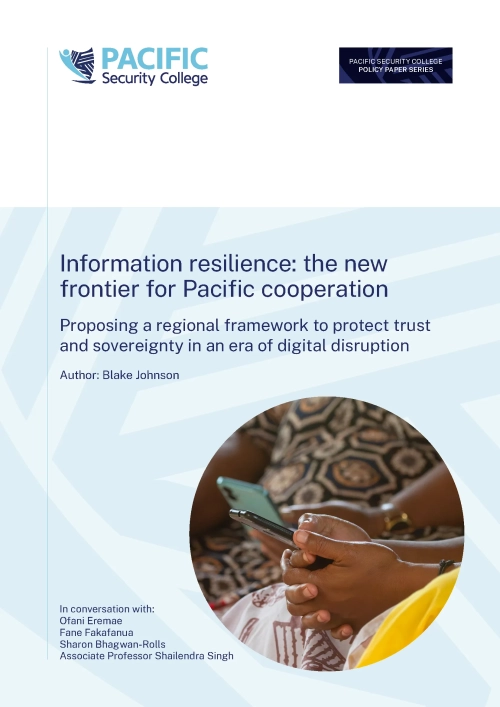
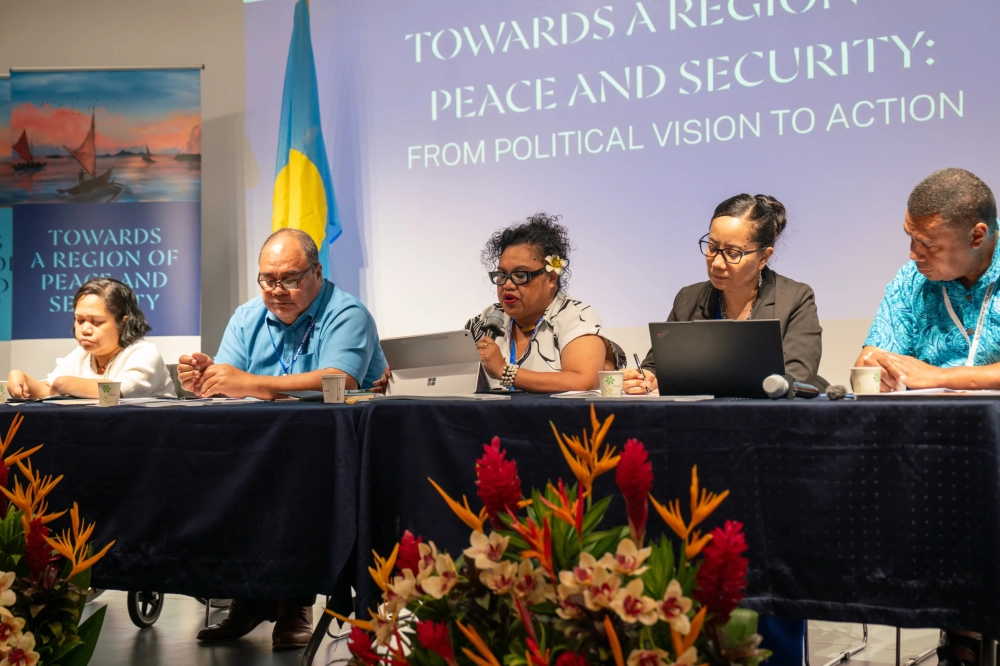
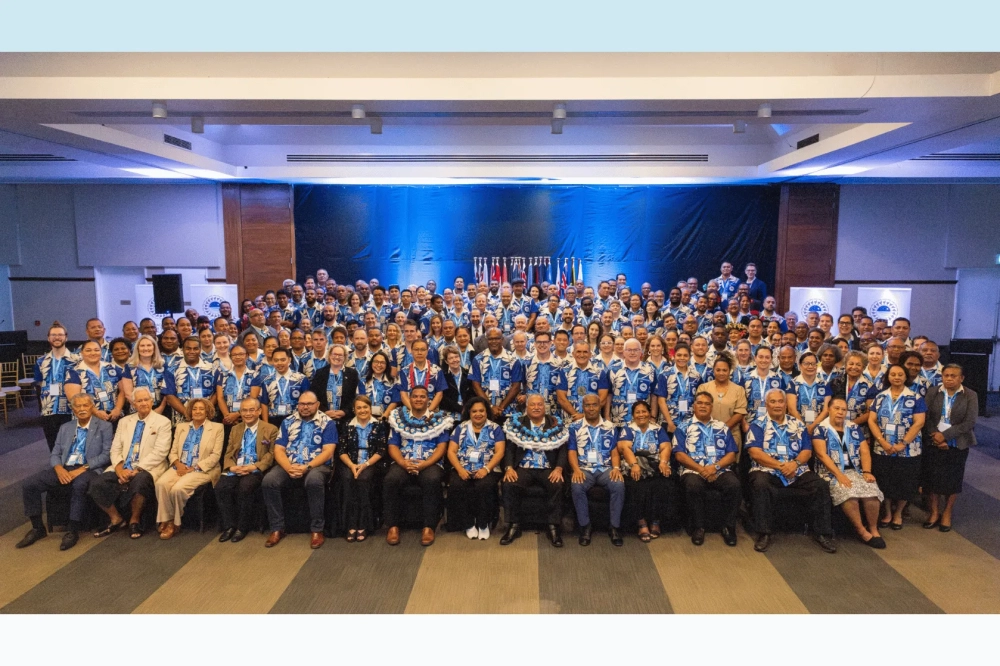
Regional action needed to strengthen Pacific information resilience
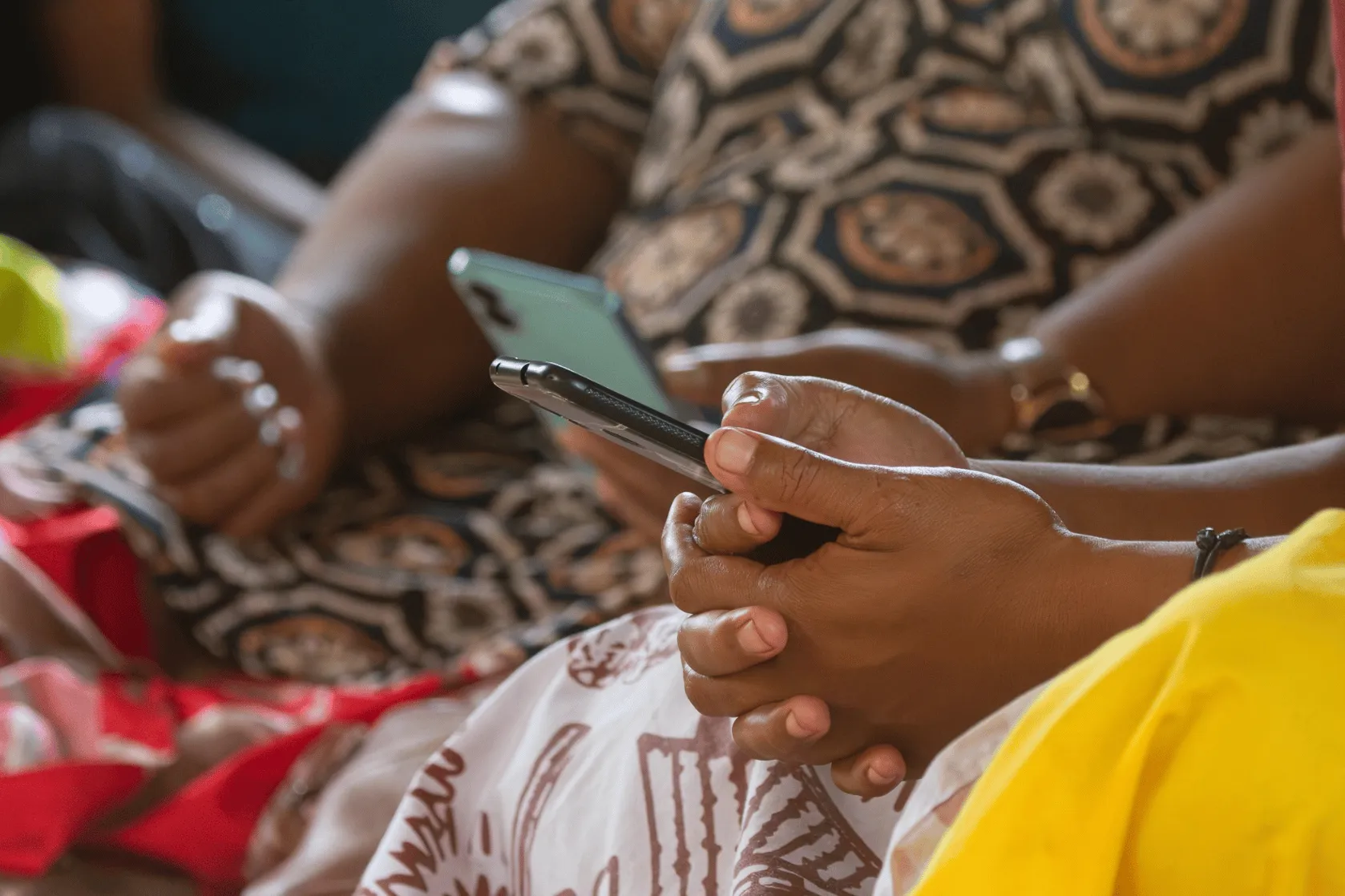
The Pacific region is entering a new information era. Photo: Pacific Security College/ACME Photography/Viniana Bau
Information resilience should be treated as a regional priority as the Pacific confronts rising misinformation, AI-generated content and online scams, according to a new paper from the Pacific Security College.
Information resilience: the new frontier for Pacific cooperation, authored by Blake Johnson, proposes a Pacific Information Resilience Statement to strengthen the region’s information environment as it navigates intensified geopolitical attention and digital disruption.
Mr Johnson, a security and development expert who researches misinformation and disinformation in the Pacific, said the region was in a new information era, which brought opportunities but also created new vulnerabilities.
“We’re seeing a rise in false information, AI-generated impersonations of politicians and other public figures, and increasingly sophisticated cyber scams. These often have immediate real-world consequences, but they also slowly erode trust. People don’t know what to believe,” he said.
Mr Johnson said the Pacific should approach information resilience in the same way it approaches climate and digital resilience: as a shared regional challenge that cuts across development, security and sovereignty.
“At its core, this proposal is about protecting trust,” he said.
“Trust allows governments to communicate effectively during crises. It enables communities to identify credible information and respond calmly during periods of disruption. It strengthens democratic confidence and social cohesion.
“Where cybersecurity protects systems, information resilience protects people, trust and decision-making.”
Mr Johnson said a unified statement would enable the Pacific to harness one of its greatest strengths: regional cooperation.
“A regional statement would provide a practical framework for cooperation, guide future regional initiatives and help align external support with Pacific priorities,” he said.
Pacific Security College Director Professor Dave Peebles said the way in which information was created, shared and consumed across the region was changing.
“Given the borderless nature of digital technologies and information flows, no country can address these challenges alone,” he said.
“Regional cooperation will be essential if the Pacific is to strengthen its collective capacity to navigate an increasingly complex information environment.”
Information resilience: the new frontier for Pacific cooperation includes insights from four regional experts with backgrounds across journalism and media, misinformation and disinformation, and peace and security: Associate Professor Shailendra Singh, Ofani Eremae, Fane Fakafanua and Sharon Bhagwan-Rolls.
Associate Professor Singh, Head of Journalism at the University of the South Pacific, said using the climate change analogy to emphasise the seriousness of the situation and its urgency was appropriate.
“With inaction or insufficient action, not only is climate change gaining momentum, but its impacts are also worsening, with some scientists concerned about reaching a tipping point,” he said.
“This situation is applicable to the information space as well in that the risks of false information, scams and AI-generated content are not only widespread, but more difficult to address and eradicate if they take hold.
“Given the enormity of the information integrity challenge, the Pacific needs to be proactive rather than reactive.”
In-depth Solomons Editor Ofani Eremae said conversations surrounding regional security and resilience have long been focused on physical infrastructure and climate adaptation.
“While those threats exist, the invisible erosion of our information ecosystem poses an equally severe risk to our democratic institutions, social cohesion and regional stability,” he said.
“There is no use building state-of-the-art, climate-resilient undersea cables if the content running through them is contaminated.”
Fane Fakafanua, Chief Operating Officer of the Royal Oceania Institute, said information resilience needed increased attention and urgency.
“Whilst each country and government is working to combat this issue according to their individual budget, access and priorities, I believe a regional effort through a regional statement will greatly assist in guiding a mutual goal for the islands — one that will help governments work together to find a solution, provide training and support the exchange of ideas,” she said.
Sharon Bhagwan-Rolls, Network Coordinator of the Pacific Women Mediators Network, emphasised that new technologies can support education, elevate diverse voices and empower women, but can still perpetuate exclusion and online harassment, and threaten peace and security.
“Digital resilience will require a clear strategy for governments and civil society to ensure communication rights give women the agency to advocate for their needs and shape national and regional peacebuilding strategies,” she said.
About the Pacific Security College policy paper series
The Pacific Security College’s policy paper series aims to contribute a diversity of views and ideas to regional conversations about the journey to 2050. The views expressed in the Pacific Security College policy papers are those of the authors alone and do not necessarily reflect the official positions of the College.