Regional security in 2026: examining the Pacific’s polycrisis
A global fuel crisis, climate change, intensifying geopolitics and a growing HIV and drug epidemic are threatening security in the Pacific.
In the first episode of the Pacific Wayfinder podcast for 2026, join Viliame Bovoro and Monalisa Tiai-Keti from the Pacific Fusion Centre and our Senior Pacific Fellow Joel Nilon as they examine the polycrisis affecting peace and security in our Blue Pacific continent.
Episode transcript
Episode transcript
Podcast season one 2026
Akka Rimon [00:04]
Welcome to the Pacific Wayfinder podcast, your guide to navigating the cross currents of security in the Blue Pacific continent.
Joel Nilon [00:21]
Bula Vinaka, Mauri, Alli, welcome, Talofa. Thank you for joining us on the Pacific Wayfinder podcast. I’m Joel Nilon, Senior Pacific Fellow at the Pacific Security College. It’s my pleasure to host our podcast this afternoon. It’s great to be with you. Now across the Pacific region, we face a range of threats to our peace and security. The most urgent of which include climate change, transnational and organised crime, the proliferation of hard drugs, and food and water security, amongst others. These threats can be exacerbated by political and geopolitical competition, and also by global conflicts like the war in Iran, which has impacted fuel availability, driven up fuel prices across the globe and across our region, and which has had all sorts of flow on impacts on the daily lives of Pacific people. Now the Pacific Fusion Centre, based in Port Vila, Vanuatu, has recently co-published and released the 2026 Pacific Security Outlook Report, in conjunction with the Pacific Islands Forum Secretariat. The report analyses in more detail these threats to our peace and security, and also offers recommendations for how our leaders can address them. To discuss the report in detail, it is my pleasure to welcome our guests to the podcast this afternoon, Mr Viliame Bovoro, the Director of the Pacific Fusion Centre, as well as Papalli Monalisa Tiai-Keti, the Assistant Director at the Pacific Fusion Centre, again based in Port Vila, Vanuatu. Vili, Monal isa, good afternoon, and welcome to you both. How are you doing?
Viliame Bovoro [02:21]
Well, Bula Vinaka Joel. And really, it’s a pleasure to be on this podcast this afternoon, and have the opportunity to discuss, you know, some of the things that we’ve covered in that group report. And really looking forward to the discussion ahead. Thanks, Joel.
Monalisa Tiai-Keti [02:38]
Good afternoon, Joel. Would also like to echo Directors’ comments. We’re very excited to be part of today’s program, and you know, share our views in regards to the recent published piece or report. So, very excited, and thank you for bringing us along to this discussion.
Joel Nilon [03:07]
Thank you very m uch, Papalli. And also, congratulations to you on your recent appointment as Assistant Director. It’s really wonderful to have you here in the position. Can I say, too, congratulations to the Pacific Fusion Centre, and also I guess your co-publishers, the Pacific Islands Forum Secretariat, on the publication of the report. It is sobering reading in many ways, but I guess it’s really important that we have a clear picture and a clear understanding of the range of threats to our national and regional security across the Pacific. So, thank you both again for this work. If I may, if we can just get into some of the details and the substance of the report. I just want to start by this idea of poly crisis that you, you, you set out in the report. Polycrisis is a situation in which many threats or crises, you know, come together and converge and overlap and interact with each other. Maybe I can ask you both, you know, which combinations of threats and crises worry you most for the people of the Pacific over the coming years. Thank you.
Viliame Bovoro [04:26]
Really, for us, I think the polycrisis was really first coined by Prime Minister Rabuka, or he used it back in 2024 I think, at one of the College’s, you know, the regional conference that was held back then in Suva in Fiji, but he really used the lens polycrisis to look at the intersection between climate change, transnational crime, and human security, which is what he sort of covered, and I think the. It still remains true today, in terms of the key challenges that are facing the region, but, but to me nowadays, everything that that we’re sort of contending with now is continuously being sharpened, and as we’ve said in the report, you know, the, we’re seeing that all across all of the nine sort of thematic areas that we look at, everything seems to be deteriorating across the region, and that is really, I guess, the confluence of what this polycrisis is. I know that it was originally coined as the nexus between climate change, transnational crime, and human security, but I would even say that to me it’s really about the impact of a number of drivers, more broader than just those three. I mean, the things like the flow on impact that it has on economic security, the sort of ramping up of militarisation or securitisation in the Pacific, which is, you know, it is detracting from Pacific priorities, you know, like, I know that people always say, in the Pacific, we are worried about putting bread and butter on the table, sending our kids to school, but this polycrisis, and how things are beginning to deteriorate across all of this range of security threats and trends, is having an impact on our ability to do that, and I think, you know, things for me, I don’t want to be the bearer of bad news, but it seems that given the way that we are currently heading, a lot of this will continue to worsen it rather than become better in the next next few years. So it’s really, I think, more broader than just looking at transnational crime, climate change, and human security, but then really it’s incumbent upon us to really see how we as a region can organise ourselves collectively to address some of these threats.
Joel Nilon [06:48]
Thank you very much Vili. Monalisa, i’ll turn to you here.
Monalisa Tiai-Keti [06:53]
If I may add, I think, as Director says, you know, it’s such a good opportunity for the region to really look at all the nine thematic areas that are articulated in the report. One thing that the region needs to be aware of is we cannot just focus on one particular area, but rather understanding how all of this security concerns affect the whole region, whether it be climate change, TNOC, or human security, we need to ensure that the other areas that are highlighted in the reports are not forgotten or not looked upon, so it’s important, right from the our political leaders all the way down to those in the community, they need to really understand how this, you know, not one issue can be dealt with. It needs to be understood holistically, so that whatever decision or whatever response that the region needs to provide or needs to consider in terms of what we are facing now at this point in time, it needs to be done from a collective perspective. So that’s why you know for us it’s very important to highlight this in the report, so that there is a collective input and collective solution, and how to, how we can as a region resolve all these issues.
Joel Nilon [08:45]
Thank you so much, Monalisa. And I guess you’re, you’re both saying that when we, when it comes to the collective, it’s not just about 18 member countries, it’s also about the different actors within our communities, right? It’s not just the role of government to be responding to these, to these issues and these threats, but there’s a role for others in our community to play. I think that’s a really important point you’re making, there. Thank you for that. I think it sets the scene and the tone for our discussion this afternoon. I wanted to turn to another key theme in the report, climate change, and I know in the report you identify climate change as the single greatest threat to the security of the Pacific, and you, I guess, align yourself with statements of forum leaders in saying that, but I guess we, you know, it’d be good to just discuss for you, how does this understanding fundamentally reshape or change what security means for Pacific governments and people compared to some of the more traditional approaches to security.
Viliame Bovoro [10:05]
Thanks, Joel. Maybe I’ll take this, and then, of course, Monalisa can add to things that I’ve missed, which I no doubt will, but to me, really, you know, climate change, as we often say, it’s a threat multiplier. It basically, you know, very similar to what the polycrisis, or the type of effect. It accelerates or multiplies a lot of the other risks or threats that we’re already facing in the Pacific. So, if you look at, for instance, when we have natural disasters, climate change is making natural disasters more severe, more frequent, and more acute. And if you overlay this with a security lens, basically it will change the way that you know that we want security actors to be responding to such types of crisis. We’ve seen in the past, I mean, I’m just talking about impacts on the way that the security sector is planned for these events. Usually, the security sector has been very, and defense have been focused on getting capabilities like war fighting capabilities for the region. This has now shifted because of the impact of climate change. You’ll see more and more countries that have militaries, they’re developing their capability to be able to respond to humanitarian assistance and disaster response type situations, more so than you know, like having capability to fight wars, and this is coming more and more to the fore, but really I think the way that climate change has really reshaped the way that our countries think about securities is along these lines, if you look at how countries are now planning for relocation within their countries as a result of sea level rise, it is gone a step beyond just moving people from one one location to another. Now, there’s to be an assessment, a security assessment carried out about the potential lines of conflict that can arise when you’re moving a community from here to a new new location. The issues around land, issues around resettling them. When the receiving community sees the incoming community receiving government assistance, housing, what type of impact does it have on the receiving community at the end? So I guess there’s a lot of considerations. It requires a much more broader planning rather than just the traditional security sector, and I think the, there’s still a need for us to strengthen how the security sector plugs into the overall planning at government level on how they can address climate change, and again, Joel, to the point that you talked about earlier, it’s not just going to be a government and law enforcement security, it has to be a full, like a whole of community or whole of nation type of approach to some of these threats that we are now facing.
Joel Nilon [12:46]
Thank you very much, Vili. Very comprehensive response, Monalisa. I’ll turn to you for any thing to add. Thank you.
Monalisa Tiai-Keti [12:54]
I think, in terms of, you know, our region, we have the large, the largest ocean in, in the whole world, and we are seeing firsthand the impact of climate change in terms of sea level rising, and how our small island nations all over the Pacific are trying to, you know, adapt and be resilient in terms of responding to all this climate change effects that is affecting the region, in terms of, I think, in to add on to what Director has indicated, is, you know, there’s a lot of efforts that are being done, especially for those now, for countries that are now being affected by climate change, as to how they ensure that they not only survive but maintain their cultures and traditions, and we look at, I think, Tuvalu who’s doing efforts around ensuring that you know with what’s happening in terms of the impact of climate change for the future generation not to lose their cultures and their tradition, so those in terms of when we’re talking about climate change is not just, you know, sea level rising. There’s a whole lot of issues that government and the communities need to look at to ensure that, you know, they can continue to maintain and hold on to their traditions, even even though our region has very little contribution to, you know, what’s happening in terms of climate pollution, but we are, our people are being resilient and finding ways to adapt to all this changes that are happening.
Joel Nilon [15:01]
If we can change gears a little bit, and just move to a third sort of area of focus from the report around, you know, issues related to managing geopolitical competition, and we know that, you know, the intensifying competition between major powers in our region has led, in part, to a rise of bilateral security agreements between, you know, powers and some of our Pacific Island countries. I think, in that, in that context, I do want to ask you both, how Pacific Island countries can maintain, you know, regional unity as a group, and also avoid the fragmentation of their security architecture that can potentially happen, you know, when there’s an increasing focus on security agreements at a more bilateral level.
Monalisa Tiai-Keti [16:01]
I think we, the work that it’s being done in the region is always respecting sovereignty, but also making sure that our political leaders understand that when we are looking at climate change, transnational organised crime, it cannot be dealt with by just one country. It’s affecting all of us. So, there needs to be a collective approach as to how we deal with these situations. Of course, you know the geopolitical competition in the region and the increase of bilateral arrangements that are being done, especially around the security, traditional security areas, is one that you know it’s it’s a discretion for each own country, but what is important is making sure that the political government must understand that, you know, to resolve all this, or to better address all these regional issues that we are facing it requires, like I said before, a holistic and a whole of region approach.
Viliame Bovoro [17:27]
For me, it’s really around transparency, I guess, which has been some of the concerns around some of the bilateral agreements that some of our countries have entered into. Of course, as Monalisa said it is the sovereign right of our members to undertake these bilateral agreements, but I guess given that we are all part of this Pacific family, you know, having transparency around some of the agreements will go a long way, and I must say, as well, like we’ve not only seen an increase between Pacific Island countries and external partners, but even within the Pacific family themselves, we’ve seen Australia enter into a number of bilateral agreements, we’ve seen even like Papua New Guinea with Solomon Island, Solomon Islands with Fiji, Fiji, and vice versa, and as has been shared by modelists, and this is all in response to this intensifying competition, but I think if there is most of our countries now have national security policies, and a lot of our countries enter into these arrangements based on the national security policies, so for me building understanding and transparency around these bilateral agreements, you know, will only enhance the linkages between that and the collective things that they’ve agreed to.
Joel Nilon [18:50]
No, fully, fully agree with you, you both, and fully agree. It’s really about, you know, transparency that continues to allow, you know, trust and confidence amongst those who have the sovereign right to act bilaterally, but also, you know, exist within a broader family where collective action remains so, so important. Thank you very much to you both for those again very comprehensive responses. I guess, staying on, you know, the theme of the interaction of, you know, broader global dynamics in our region, we’ve also seen a lot of commentary recently in relation to conflicts that are happening all around the world right now, whether that’s, you know, in Gaza or Ukraine, or even recently in Iran, some of this commentary, I guess, suggests that we’re seeing maybe an erosion or even a collapse of the global rules-based order, probably from a Pacific perspective. What do you think this means in terms of the erosion of global rules for us in the Pacific, especially given that we have traditionally relied on, you know, international law and the multilateral system in order to, you know, guarantee and advance our security agenda.
Viliame Bovoro [20:17]
Thanks, Joel. You know, you know, for from my perspective, and also I mean, we highlighted this in the report as well. I agree, there is an erosion of the global rules-based order. I think this started, I guess, a decade ago, when you see the actions by China and Russia in the way that they’ve been testing the global rules-based order. I always use the analogy that the rules-based order is like a rubber band. Actors or big powers, they are able to stretch that rubber band in the direction that they want, but hopefully they don’t break the break the rubber band. And we are seeing that people say that, I guess, that China and Russia are revisionist powers, meaning that they want to revise the global order. I take a view that this may, you know, to some extent, there, there, Russia is trying to be to disrupt the global order, while China seeks to act within the global rules-based order, which it’s, it’s to the, to their benefit, and then use other means when they see it’s more better for the national interest, but what is surprising now, Joel, is that the US is one of the founders of this global rules-based order, is now also playing a part in, I wouldn’t say eroding it, but maybe you know using it in ways I don’t want to say, but innovative ways, I guess, in how they are prosecuting some of the efforts around the around security, and how they are progressing this current administration’s America First, there, but, but that being said, when you bring it back to the Pacific Joel, we, we, I people always think that we’re a passive onlooker to all these things, but that is far from the truth. We have our values that are sort of enshrined by the Pacific way that we all allude to. I personally think that the Pacific way that was evident in 1970 when the forum was formed needs to be updated to the current environment that we now find ourselves in, and, and I think there needs to be a, you know, another discussion by our leaders, you know, all of our countries in, in what the Pacific way now means for us today, in particular, when we have a number of declarations that are coming now, like th e Blue Pacific Ocean of Peace. I always, another analogy that I will say is that the Pacific has a lot of carrots, but not enough sticks, and that is why we are so dependent on this on this rules-based order. But if the very people who have created this and we have stood it up are now themselves testing it and trying to shift it, you know, it takes away from our what we always say, that we are, we respect the rules-based order based on the UN Charter, which has always been the, yeah, and I think looking forward, and it’s then the report that there are new emerging issues that will continue to test this rules-based order within the Pacific, this is, we are already seeing it being tested around climate change. We’re seeing it being tested around the trade rules that we have, but I think there are other things that are coming up now, like critical minerals, space, the use of space, and also, you know, emerging technologies, and these are things that that are also highlighted in the report, where I think these types of discussions on how global governance, and then, by in effect, how that will impact, you know, the way that the Pacific sort of addresses or deals with these things. This will will come to the fore in the, in the near future.
Joel Nilon [23:57]
Thank you, Vili Monalisa. Anything further?
Monalisa Tiai-Keti [24:00]
I think given that director is adding quite a few analogies, you know, when you were talking about a collective response, I think what comes to mind also is probably how, and I keep referring to Epeli Hau’ofa because I think he made a really good observation about the strength of the Pacific when they come together and rather than the perception that we are just islands in the sea we are you know a sea of islands and collectively we are more stronger in terms of voicing Pacific needs at an international level, and you know a lot of what is happening around the world does impact us, and we’re seeing it with the energy crisis that is affecting us, although we are quite far away from from the Strait of Hormuz, but in the impact that we are now feeling really calls for for us to come together, and especially for our political leaders to really see how important is for, for the region to, to, you know, address international issues from a collective, and I think this is the best opportunity, as to highlight our regional voice to, to the superpowers.
Joel Nilon [25:38]
I think what you just said there, Monalisa, I think is the is the vision for for for our region, you know, from from the days of the founding of the Forum, even prior to that, through what I believe has been writing on, and you know, through to today being able to make the most of norms and values in the way we come together through something like Pacific way to even our own more formal governance, I see leaders have opted to invoke Biketawa not long ago as a way to respond to the fuel crisis that you’ve spoken about, so I mean all of these things are ways that we, yeah, we really need to come together to make the most of the crisis. If I can put it that way, there’s a crisis that is here. I mean, yes, it’s a concern, but also an opportunity. So, I want to point us to another critical issue that you, you have in the report related to transnational organised crime and its impact, a growing impact across our region, and so again you do highlight the influence of TNOC, particularly through the trafficking of hard drugs, such as, you know, methamphetamine and cocaine, to you, and based on the report, How do you see this as changing the the fabric of our Pacific communities? And do you think that our current responses are keeping pace with the with the with the threat?
Monalisa Tiai-Keti [27:20]
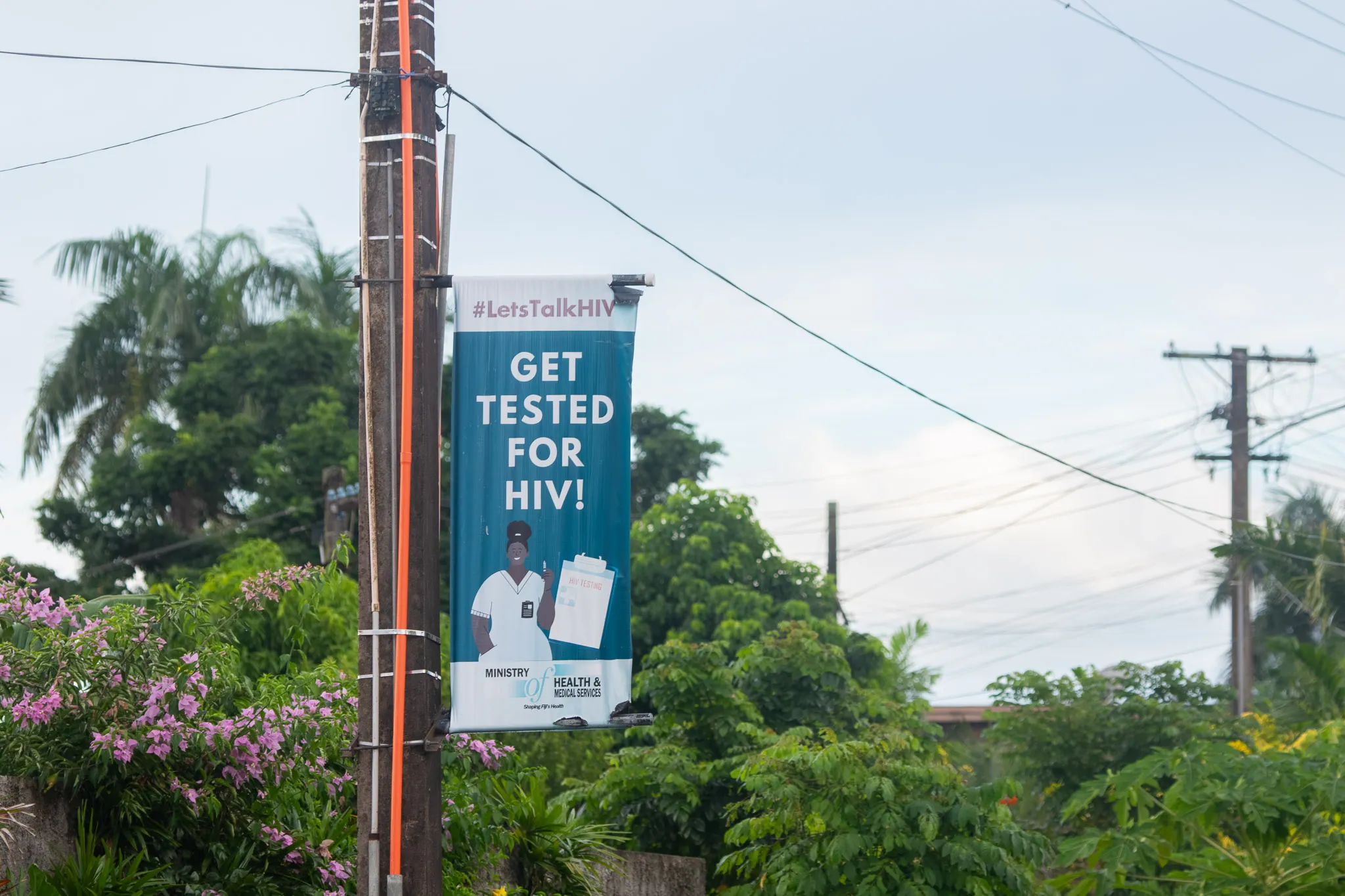
Of course, in terms of we are seeing it also in terms of amount of detection and seizures that are happening across the region. I think when, when the transnational organised crime strategy was launched in 2024, back then, I think, in terms of seizures, we have – we’ve seen how the seizures were detected in amounts of kilograms and grams, but I think lately we’ve seen that the amounts that have been detected by law enforcement are found in tons, so that really, you know, shows that I think our region is no longer just a transiting point for all these drugs that are coming through the region, and we’re seeing also the impact of drugs, and I think the health is the AIDS epidemic in Fiji, so very unfortunate, but you know, I think as a region we continue to highlight the importance of a collective approach to this issue, as well. Information, I think, from law enforcement that we have already, and it’s already made known on open sources. We know that the market is Australia and New Zealand, so we’re finding the important thing is to really look at how we deter this transnational organised crime from affecting our communities, but looking at what is happening, the health impact of drugs in Fiji, and how, if solutions are not being addressed, then this problem will eventually affect the whole region. I think, as a, in terms of my background before taking up this role, you know, Fiji has always been, if what happens in Fiji will almost like funnel down into the whole region, we don’t want what’s happening now in Fiji to spill out into the region, but to ensure that we stop this in Fiji, is we need to find solutions as to how we can. Solve this matter, so I think there are regional meetings that are happening soon that is going to look at ways to improve the way law enforcement operates, the way law enforcement share information, and you know, also around awareness, because I think the community may feel like they’re being isolated from all these issues and not being involved in finding solutions, so, yep it’s a serious issue, but one that we need to collectively look at as well.
Joel Nilon [30:39]
Thank you very much, Papalii Mona Lisa, and yes, your particular experience as a former Assistant Police Commissioner in Samoa gives really important insight into, into this issue. Thank you very much for that response. Vili, any anything
Viliame Bovoro [31:00]
to add? I really want to emphasize what Monalisa said, you know, in Fiji, right now 1% of the population has been tested positive for HIV, so that points to a much greater number of people that are living with HIV, and as evidenced by by the statistics, together with large seizures that were being caught in Fiji, it links up very.. I mean, it synchronises the time that these issues were being found, the spillover of drugs into the local market in Fiji with the increase in HIV rates. So it goes back to that issue that you were talking about, Joel. I mean, for me, like the real danger, and as Monalisa said, we are in danger of losing a whole generation there in Fiji, the youth, the youth that we have now, the multi, the huge number of people being detected are between the ages of 20 to 29 and that’s our youth, these are the people that we are going to be relying on to run Fiji in the next 15 to 20 years, when we are long gone, so for me, like the issue is, you know, can be law enforcement driven, but I think one of Monalisa’s competitors also said that you can’t arrest yourself out of this crisis, it needs to be, as she said, a whole of government, a whole of society, whole of community approach, where the solutions are developed and led by the whole community, and not just law enforcement. Monalisa, you, you mentioned there are a number of regional dialogs, meetings where you know ministers, senior officials, experts will will come together to talk about a regional approach and collective approach for countries, you know, not that are not Fiji, that are you know really looking upon the things that are happening here and wanting to, I guess, you know, shore up or protect you know themselves. What measures do you do? You think they can, they can
Joel Nilon [32:59]
take to do that?
Monalisa Tiai-Keti [33:02]
I think in terms of a regional response, whilst not all countries are part of PIFs, but certainly there’s a number of agencies, regional agencies that also looking into this issue, whether it’s health, whether it’s, you know, social sectors, those are the agencies that I feel will also need to contribute, and when I say contribute is making sure that the message or decisions that are being made at PIFs, you know, funnel down all the way to the to those people at the community level, because they need to understand what has been discussed, and I think sometimes we lose, we lose that in terms of sharing the information from the top all the way down to that frontline officer, so that they also take ownership of this response. There’s also, I think now with it, with technology being made available and fight across the region, there’s, you know, connectivity is making information easier for for us to access to, it’s just a matter of making sure that you know we provide appropriate links to those at the community and those who are not, because we, of course, we can’t bring everyone to Fiji for a summit or for a dialogue of discussion. One solution in Fiji might not be the most, the best solution somewhere up north, but understanding that this is how Fiji is dealing with this situation, it can also form an understanding and help each community respond better to, to, to the impact of, you know, drug drugs in, in our communities.
Joel Nilon [35:22]
Thank you so much, Monalisa, for that. Colleagues, you know a lot of our discussion has been on the threats and challenges. Maybe as a closing question to you both, focused on, as you mentioned before Vili, the Ocean of Peace, the Ocean of Peace Declaration has been presented in the report as a, I guess, as a political anchor for our region, taking that, I guess, into account for you both, what would I guess success look like if the vision and the aspirations of the Ocean of Peace were to be fully sort of realised in practice. Thank you. I’ll open it up
Viliame Bovoro [36:10]
For me, the Ocean of Peace, you’ve correctly termed it, is a political anchor for all of the Pacific efforts. I guess, because I think in order to have peace, you need to have good progress economically, trade wise, socially, culturally, everything. It all plays into this element of how we not only build but then sustain and and strengthen peace across all of the Pacific. To me, also, I think success for me would would really be the Ocean of Peace being an intergenerational commitment, just like the 2050 Strategy is. It cannot be something that this current crop of Pacific leaders have agreed to. And then somewhere five years down the line, because leadership changes across the Pacific, we need to be trying to reinforce or relitigate some of the commitments that they’ve made, that or that our current crop of leaders have made, and for that, Joel, for me, really, success is not only about us holding our external partners to account through this Ocean of Peace Declaration, but it’s also about holding us, the Pacific, ourselves in holding us to account for the commitments that we have made under this declaration and other declarations that we’ve made.
Joel Nilon [37:27]
Thank you, Vili. Maybe to add to the analogies, like any good partnership, or even marriage, you know, you have to recommit to the vows every now and then, right?
Joel Nilon [37:41]
That is true.
Joel Nilon [37:44]
Otherwise something might go a bit wrong. Commitment, commitment. Thank you so much, Vili for that, Monalisa. I’d love to give you the final, the final word on this. Thank you,
Monalisa Tiai-Keti [38:00]
Thank you, Joel. I think, for me, you know, when we talk about the Ocean of Peace, and really the emphasis is on peace. I think it’s we are at a juncture where it’s important when we talk about peace, we are inclusive, and with that, I think you know we’ve seen how the lenses of a certain particular group of, you know, security experts does not include the views of others, and I think, as a collective, we need to ensure that you know the discussions around and contribution to peace is including including men, women, children, and the whole community, and I think collectively, if everybody understands, then everybody will have that contribution and will take value and take pride into making sure that our region continues to be a Blue Pacific, so that’s I think for me what it means to what it means for me personally about what peace is all about is about including the views of others when discussions are being made around the important issues that are affecting us all and not just a very limited number of representation, I think all of us, even myself and Director, probably when we got appointed into this role, it’s important to really see the whole Pacific from, from like a helicopter view, and understanding why things are the way it is, and you know, I think the Pacific Island Forum Secretariat will make a really good platform to provide that sort of renewal of vows to our political leaders, who are coming through, because they deserve to understand, and we are mindful that, you know, leaders and Directors, regional are all in their positions at a certain point of time, and not a lifetime role, so to ensure that there’s a continuous commitment is making sure that they feel they have a part to play in in in our efforts for Ocean of Peace.
Joel Nilon [40:54]
Malo le soifua. Monalisa, thank you so much. Before we end this afternoon, is there any final comments or statements either of you would like to make? AD, you first.
Monalisa Tiai-Keti [41:09]
Yeah. Thank you, Joel. And thank you to the Pacific Security College for inviting us to be part of this panel we are very truly honoured to be asked to participate and really to have the opportunity to talk more and explain more about the Pacific Security Outlook Report.
Viliame Bovoro [41:35]
Thank you so much, Monalisa. Vili. Thank you. Thank you, Joel. And, yeah, just, just to echo what Monalisa said, you know, when you read through the report, it may seem very bleak and very discouraging, but I just want to also say that, you know, the Pacific, we are not passive. As you read through the report under each of the thematic areas, you will see the opportunities that we are talking about that the Pacific can look at in order to address some of these threats and risks and concerns that we are facing, and a lot of those opportunities, if you look at there are already work that is being done at the regional level, all we are calling for is that we need to accelerate and strengthen and really fully resource some of these efforts, lines of effort that we are putting into place, so you know, I just want to tell our listeners, you know, the, if you read the report, you know, it may paint a very bleak picture, but rest assured, we are not passive, the Pacific, we are, we are fighting back as a collective to address these concerns, so rest assured of that, and again, just to echo what Monalisa had said, you know, really, thank the Security College for allowing us this opportunity to come on and talk about this report. This is our annual report, it’s our flagship product, and it’s available to everyone. Not all our products are available to members of the public, but this is the only product by the Centre that is publicly available, and we encourage you all to have a read as you listen to this podcast, but also have a read of the report, and then you know we’re always happy to receive feedback on that product, and it’s there as well in the report how you can get in contact with us, but again, Joel and the Security College, thank you so much for the opportunity today. Thank you very much, Vili. And it leaves me to again say a big congratulations
Joel Nilon [43:30]
to the Pacific Fusion Centre and also the Pacific Islands Forum Secretariat for the publication and the production of the Pacific Security Outlook Report. Thank you both sincerely for your time this afternoon. It’s been a wonderful discussion, and hopefully we can do this again sometime in the future. Let me also thank our audiences and our stakeholders from across the Blue Pacific for joining us for this episode of the Pacific Wayfinder podcast. Of course, we wish you well wherever you are across the Blue Pacific continent, and we look forward to seeing you on the next episode. Goodbye for now.