Decarbonisation necessary for a sustainable future, Pacific experts warn
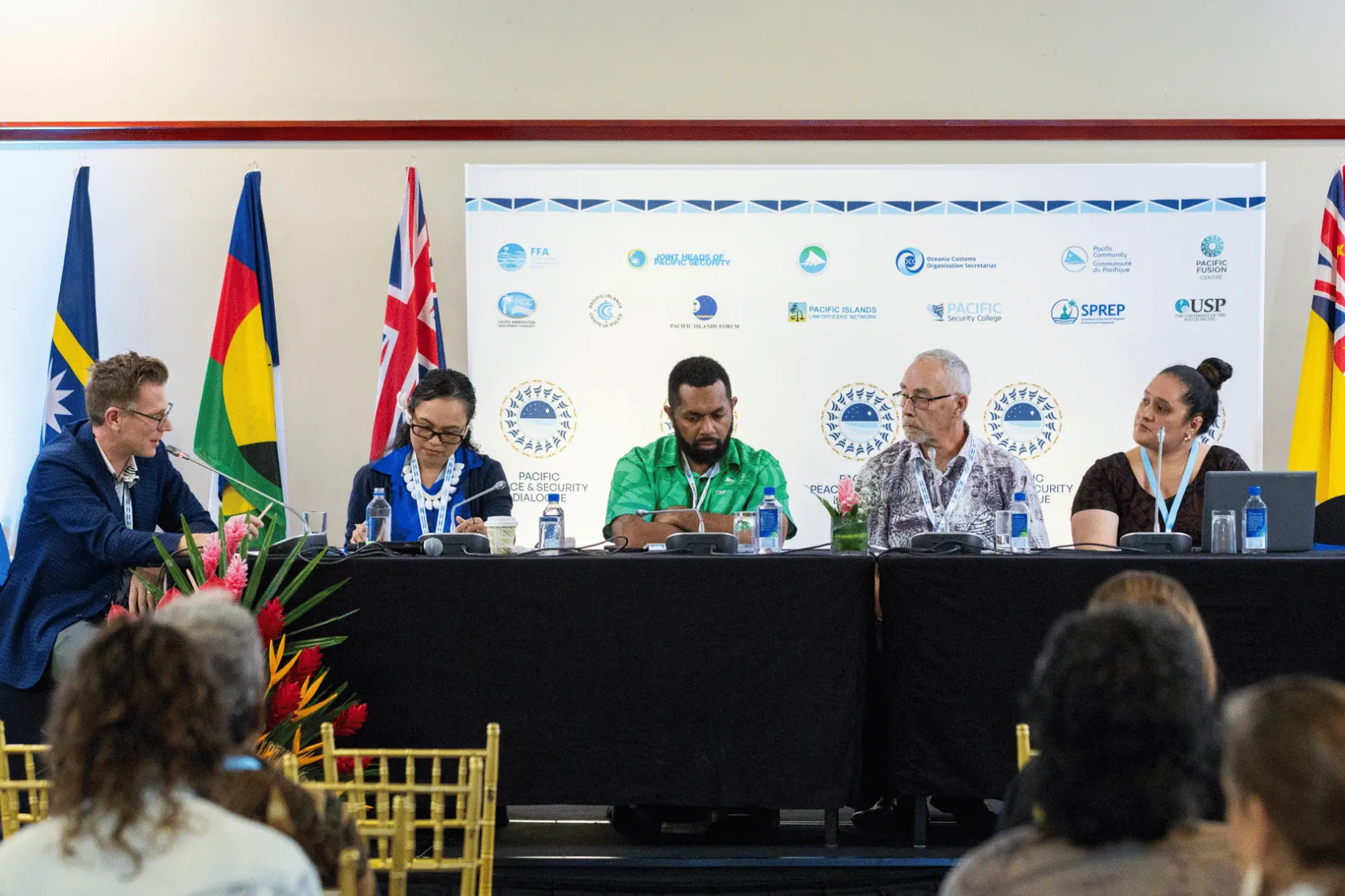
Moderator Hugo Temby with panellists Ngedikes Olai Uludong, Antony Garae, Peter Nuttall, and Toleafoa Annie Tuisuga. Photo: Pacific Security College
Energy experts from across the Pacific have warned the transition to renewable energy must learn from the past, speaking at the Pacific Peace and Security Dialogue.
The current fuel crisis has shown the critical importance of fast tracking the energy transition, the panellists said. But they urged policymakers to heed the lessons of the past, including the importance of community leadership.
The Regional cooperation for the energy transition panel included Pacific Community’s Deputy Director of the Georesources and Energy Programme, Ngedikes Olai Uludong; Scientific Research Organisation of Samoa’s Manager of the Environment and Renewable Energy Division, Toleafoa Annie Tuisuga; Pacific Community’s Coordinator of the Office of the Pacific Energy Regulator Alliance, Antony Garae; and Micronesian Center for Sustainable Transport Scientific and Technical Adviser, Dr Peter Nuttall.
Ms Tuisaga pointed to the uneven effects of rising fuel prices in Samoa and the importance of responding to the short-term crisis without undermining the region’s longer term climate ambitions.
Dr Nuttall said he didn’t know whether to “laugh or cry about this current crisis”, noting that the region experienced similar fuel shocks previously, in the 1980s and then in 2008.
“Here we are in another oil crisis, and everyone is surprised. But the reality was that this was always going to happen, and we are totally unprepared for something that we should be so prepared for.”
Dr Nuttall advocated for a prompt shift to low carbon shipping, noting that if there had been a regional focus on renewable energy 15 years ago, many countries would not be experiencing the transportation crisis they are presently. He described decarbonising shipping as “the most important economic decision this region makes going into the future.”
“It just requires prioritisiation, the local willingness, and the access to the finance,” he said.
“We’re the most import-dependent region in the world. As long as we’re going to rely on those imports and not change the way we operate our most essential transport modality, nothing else is going to change.
“The only way we get a global transition is when it is cheaper to have alternatives to fossil oil – that means the price of world shipping has to go up. The era of cheap fuel is over, so we need to learn really fast from this and react to it.”
Ms Uludong, the first woman to head the energy portfolio at SPC, said the region needed a plan for tackling the fuel crisis in the short, medium and long term.
“What a regional response could look like is in the immediate to address the coordinated fuel access for critical services. In the medium term, it’s important to look at regional information sharing … everyone wants solutions and to make informed decisions, but without data, you don’t have available information to make those decisions.
“In the long term, what that could look like is looking at the reduction of being so dependent on fossil fuels and looking at alternative sources of energy – that includes renewables, that includes electrification.”
Ms Tuisuga observed that implementing renewable energy solutions is not always straightforward.
“EVs are being identified as an option for a greener transport sector, but we’re also mindful of bringing in so many when you’re just connecting or charging them to the grid, and your grid is mostly diesel,” she said.
Ms Uludong pointed to other opportunities for changing how the Pacific uses energy, citing the Blue Concrete Initiative, an effort to transition away from the expensive importing of cement to low carbon concrete.
“Long-term solutions could be built on from these small pilot projects that we have,” she said. “In terms of how we then reduce our dependency on importing fuel, importing oil – how can we reduce that by finding solutions in different spaces, and learning from each of the islands?”
Mr Garae shared his experience of working as the Deputy Director of Vanuatu’s National Green Energy Fund, which has delivered more than 300 small-scale energy access projects.
“It started off with supporting the education sector, the health sector, promoting microsystems or solar home systems to electrify the schools and health centres – especially in the remote islands,” he said.
The fund also offers additional subsidies, depending on the needs of the relevant public institution, and strives to serve nearby communities.
“We try as much as possible to [electrify] households that reside within close proximity of the schools or health centres,” Mr Garae added.
He noted that one easy way to manage energy usage is often overlooked.
“Promoting energy efficiency and conservation at home, even in offices, [can] reduce the demand for utilities to ramp up the generators,” he said. “If we were to promote end-use efficiency, we reduce the demand.”