Regionalism ‘is becoming a practical necessity’: Tuvalu Minister calls for Pacific unity
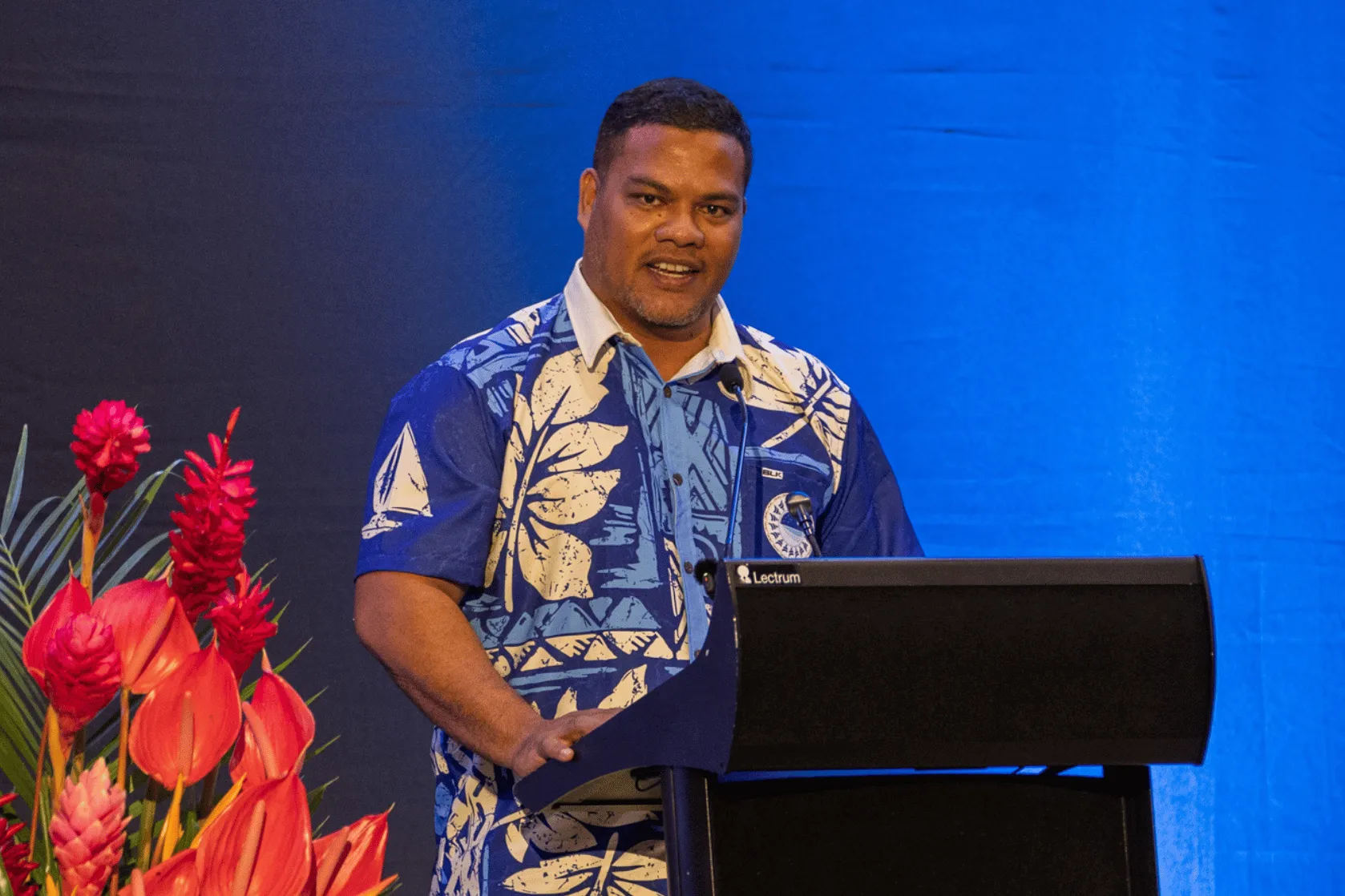
Tuvalu Minister for Transport, Energy Communication and Innovation, the Hon Simon Kofe, delivers the opening address at the Pacific Peace and Security Dialogue. Photo: Pacific Security College
Tuvalu’s Minister for Transport, Energy, Communication and Innovation, the Hon Simon Kofe, has called for Pacific unity at the opening of the third annual Pacific Peace and Security Dialogue.
Delivering the keynote address at the Opening Ceremony on Monday, Minister Kofe stressed that regionalism must be considered “more than an aspiration”.
“In an increasingly interconnected and contested world, it is becoming a practical necessity for safeguarding both our interests and our independence,” he said.
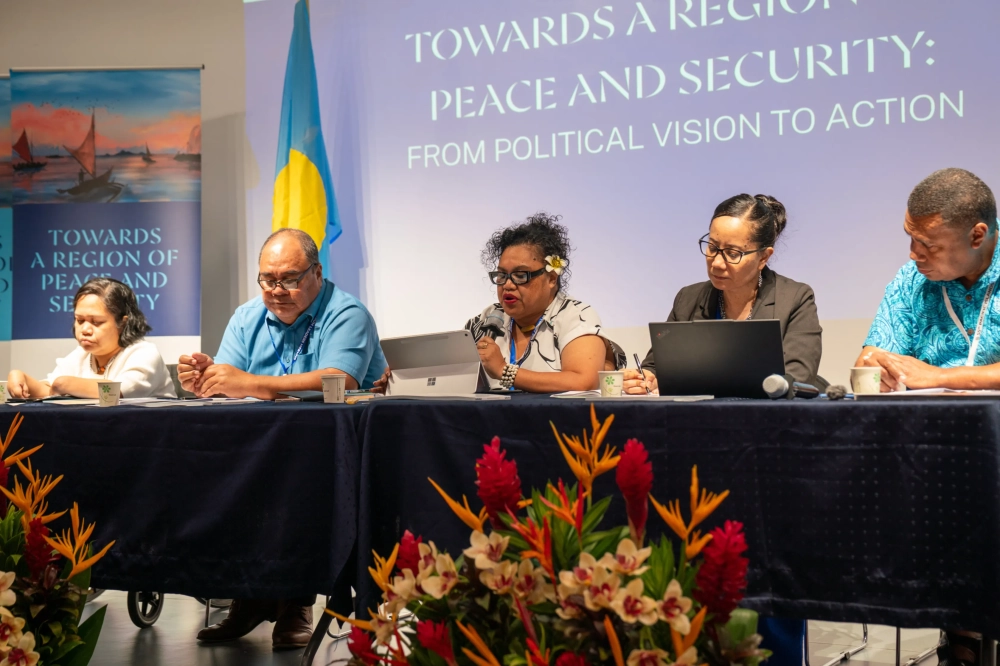
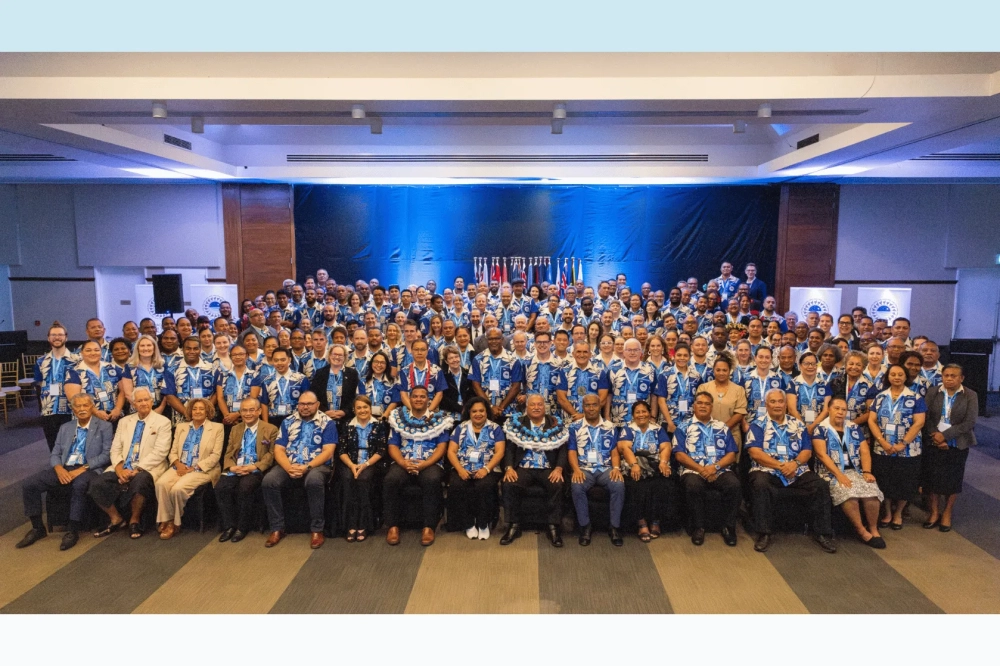
The Dialogue is the largest security gathering in the region and brings together a broad cross-section of stakeholders. This year’s theme is ‘Safeguarding a peaceful Blue Pacific together’ and focuses on regional cooperation.
Minister Kofe warned of the harms caused by fragmentation, citing its relevance across areas including aviation, labour mobility, border management, maritime surveillance, immigration, cybersecurity, and regional security cooperation.
“Fragmentation is now one of the most persistent strategic vulnerabilities facing our region,” he said.
“It appears in differences in rules and standards, in uneven enforcement across jurisdictions, and in the ability of external players – whether criminal networks, commercial interests, or geopolitical actors – to exploit these gaps.”
Minister Kofe observed that fragmentation “erodes effectiveness, weakens resilience, and diminishes our collective influence.”
He said that cooperation is not enough to combat this, rather, we must ensure that our cooperation is structured in a way that prevents fragmentation from weakening us.
In his remarks, Minister Kofe pointed to the lessons learned from the Parties to the Nauru Agreement (PNA). Choices to harmonise conservation, coordinate access arrangements, strengthen enforcement and share information strengthened the collective position of the countries involved.
“In an interconnected world, sovereignty is often strengthened, not diminished, when states act collectively,” he said.
The Pacific Blue Shipping Partnership, formally established in the Republic of the Marshall Islands, is an emerging regional initiative that embodies this unity, Minister Kofe said. The Partnership aims to advance the decarbonisation of domestic shipping across the region and spark investment in the transition to low carbon shipping.
“By pursuing common standards, shared objectives, and coordinated action, Pacific countries are demonstrating how regional cooperation can strengthen resilience while respecting national sovereignty,” Minister Kofe said.
He affirmed that security is about more than the absence of conflict or the strength of enforcement institutions.
“True security is found in resilient communities, trusted institutions, effective governance, environmental stewardship, and a region capable of acting collectively when confronted with shared challenges,” Minister Kofe said.
“The test before us is whether we have the leadership to ensure that our values are not merely spoken, but translated into the systems, decisions, and actions that will carry our peoples safely through the uncertainties ahead.
“If we succeed, future generations will inherit more than secure borders, stronger institutions, or greater prosperity. They will inherit a region that remained true to its values when those values were tested most severely.”
Minister Kofe remarked that while the 2050 Strategy for the Blue Pacific Continent is often considered a development strategy, it is “a values-based vision for our region”.
“These values include stewardship of our environment, respect for one another, collective, responsibility, solidarity, reciprocity, and a commitment to the wellbeing of present and future generations,” he said. “They are values that have sustained Pacific societies for centuries.
“Our ancestors faced their own uncertainties … yet they did so with courage, wisdom, and an unwavering belief that beyond the sikulagi – the horizon – lay opportunity and a better future for their people.
“Today, as we confront new challenges, from climate change and transnational crime to technological disruption and geopolitical competition, we are called to demonstrate that same resolve.
“The horizon before us may look different, but the compass remains the same.”