Climate finance in the Pacific: a vehicle for climate justice or a new architecture to deepen aid dependency?

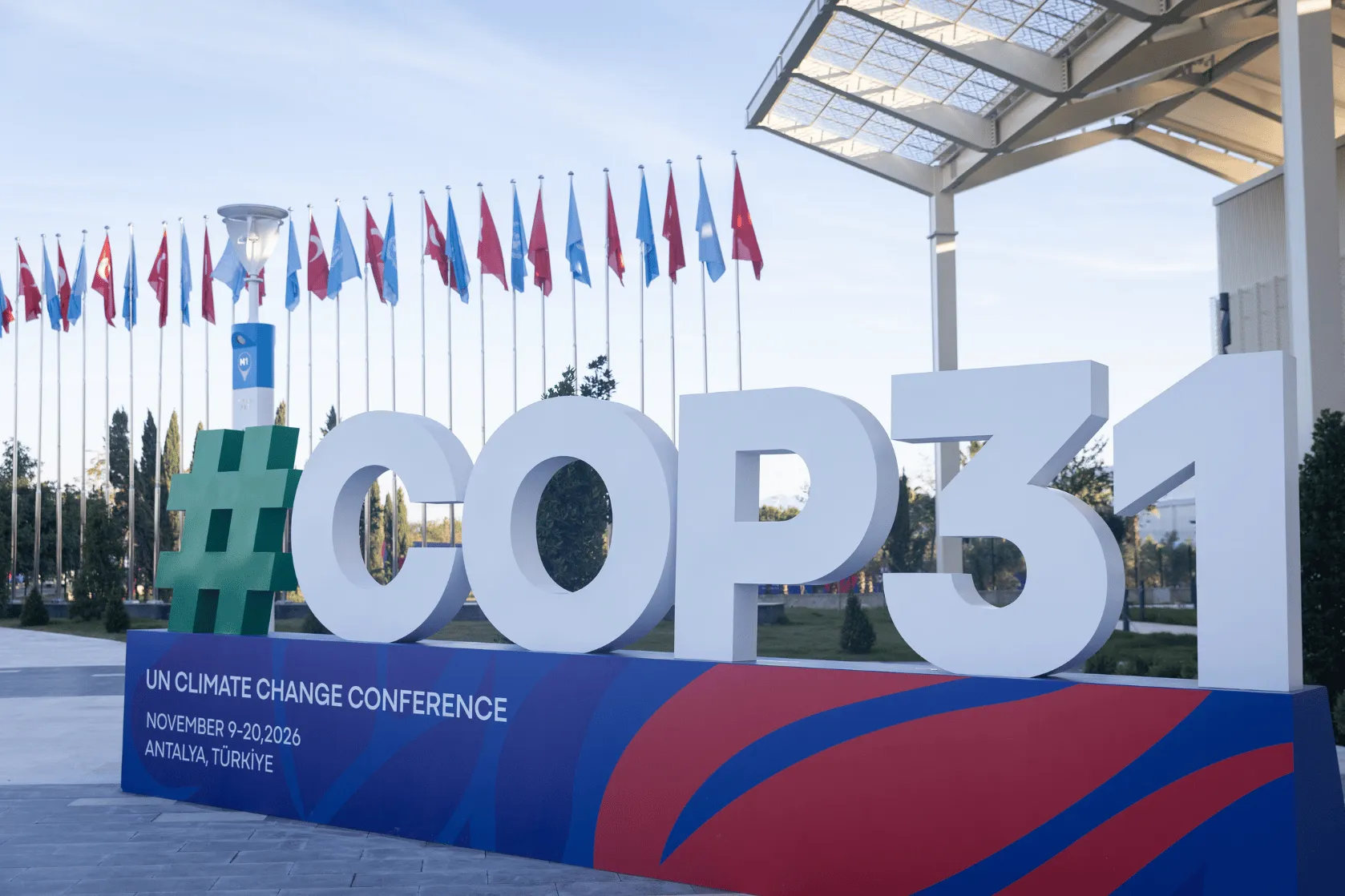
Photo: UN Climate Change/Kiara Worth/Flickr (CC BY-NC-SA 4.0)
Climate finance is high on the agenda at COP31, but funding alone will not build a resilient Blue Pacific. Strengthening genuinely locally led responses in parallel is equally critical, writes Dr Akka Rimon.
Identified as one of the Pacific region’s four priority pillars leading into COP31 in Antalya, the growing recognition of climate financing to increase access to funding and support locally led development and adaptation has been widely welcomed across the Pacific. For many Pacific leaders, it represents the culmination of decades of climate leadership and advocacy aimed at securing recognition of, and support for, the unique vulnerabilities of communities on the frontline of climate change.
The establishment of the Pacific Resilience Facility (PRF) is testament to this. Conceived as a Pacific-led and Pacific-owned financing institution, the PRF seeks to channel resources directly to communities most in need and strengthen regional ownership over climate responses.
Yet as leaders prepare to advance discussions once again in Antalya, following a stage-setting Pacific Pre-COP event, the implementation of climate finance continues to reveal a series of contradictions.
At the heart of these tensions lies a fundamental paradox: how can climate finance be genuinely locally led when resources that sustain it remain largely externally sourced and governed by donor-driven structures?
There are several measures that can complement ongoing efforts to drive locally led climate finance development while debates on delayed ambitions and commitments continue.
Climate finance for climate justice
At the outset, it is imperative to reinforce what Pacific leaders have consistently pursued: that climate finance, whether channelled through the PRF or other mechanisms such as the Green Climate Fund, must function first and foremost as a vehicle for climate justice.
For Pacific people, climate justice is not an abstract principle. It is a fundamental right to a clean, healthy and sustainable environment for a secure Pacific for all generations. This is achievable through climate funds acting as restitution to loss and damage incurred by industrialised economies on vulnerable communities.
As the Pacific has advocated, climate finance should be understood not as charity, but as a tangible expression of responsibility and moral duty to communities that contribute the least to but bear the cost of the crisis.
The design and implementation of climate finance must be shaped by the priorities, knowledge, capacities and aspirations of Pacific communities themselves. While this principle has long been championed by Pacific leaders and remains central to the PRF, realising it requires commitments to ensure disbursement to national institutions and communities, rather than to solutions designed externally and implemented for, not together with, communities.
Supporting Pacific-led resilience
A fundamental starting point for any climate finance mechanism should be an assessment of existing Pacific strengths and capacities alongside a clear understanding of the institutional, technical, workforce and financing gaps. Climate finance should be directed towards filling these gaps, strengthening what already exists and enabling local actors to exercise greater leadership over adaptation efforts.
This approach avoids the unnecessary remodelling of existing structures, the creation of parallel systems that may deliver projects but not integrate into local capacities, and the duplication of initiatives that can weaken national ownership and fragment already limited resources.
Climate finance should complement and reinforce local systems, capacities, institutions and practices rather than replace them with new, repackaged or duplicative mechanisms that risk further fragmentation.
As the world’s most aid-dependent region, the Pacific must draw on the lessons of its long experience with development assistance to shape emerging climate finance architectures. Doing so will help improve effectiveness, reduce reliance on external support, and strengthen local ownership.
The Pacific’s greatest comparative advantage in assuming justice from climate finance lies not only in its climate vulnerability, but importantly in its rich repository of traditional knowledge, community networks and long-standing traditions of collective approaches to problem-solving and mutual support. However, these strengths can only be realised if climate finance is deliberately directed towards building the capabilities of Pacific countries to manage their own resilience agendas over the long term.
Too often climate finance continues to rely heavily on external expertise, short-term consultancy arrangements and project delivery models that may achieve immediate outputs but leave little lasting capacity behind. Such approaches risk entrenching dependency rather than resilience. A truly Pacific-led climate finance architecture should be measured not only by the volumes of funds disbursed, but by its ability to leave behind stronger institutions, skilled local experts — whether practitioners, engineers, scientists, or architects — backed by sustainable community-led systems that endure beyond project cycles.
As discussions on the PRF’s delivery architecture continue, the Pacific must seize this opportunity to further strengthen pathways that ensure climate finance serves as a practical vehicle, enabling Pacific peoples to design, implement, lead and sustain their own adaptation and resilience efforts.
Drawing a clear line
Furthermore, financing partners must maintain a clear distinction between climate finance and existing Official Development Assistance (ODA) commitments. Under the United Nations Convention on Climate Change (UNFCCC), climate finance was conceived unambiguously as “new and additional” support for vulnerable countries to address climate impacts. It is not a re-allocation of existing development assistance.
This week, as attention turns to Australia at the helm of the world’s largest climate gathering in Türkiye, Pacific countries will be looking not only for tangible outcomes, but also for greater clarity regarding climate and development financing commitments.
Australia’s integrated development approach illustrates both the opportunities and challenges of mainstreaming climate considerations across development assistance. Embedding climate support within its broader development programming can improve policy coherence and reduce administrative burdens, especially for smaller Pacific Island Countries with stretched resources and capacities. However, such integration also raises legitimate concerns regarding transparency and climate action commitments.
A clear distinction provides certainty over what funding is genuinely contributed to adaptation and resilience building, above and beyond ongoing development assistance. Such clarity avoids finance becoming an accounting exercise in which aid commitments are repackaged and reported as climate action, as research analysis has found.
As leaders negotiate in Antalya over the next two weeks, it is hoped the Pacific and the global community can begin to realise a vision of financing that does more than support adaptation alone.
While renewed commitments to climate action and scaled-up finance remain essential, the ultimate measure of success lies not only in the volume of funds mobilised, but in its transformative impact.
Climate finance must function as an instrument of climate justice, strengthening Pacific agency, ownership and institutional capacity for long-term resilience across the Blue Pacific.
Dr Akka Rimon is a Research and Engagement Fellow at the Pacific Security College. Her research spans migration governance, climate security, diplomacy and development in the Pacific.
Views expressed via the Pacific Wayfinder blog are not necessarily those of the Pacific Security College. Read our publishing policy.