Imagining a feminist future for the Blue Pacific
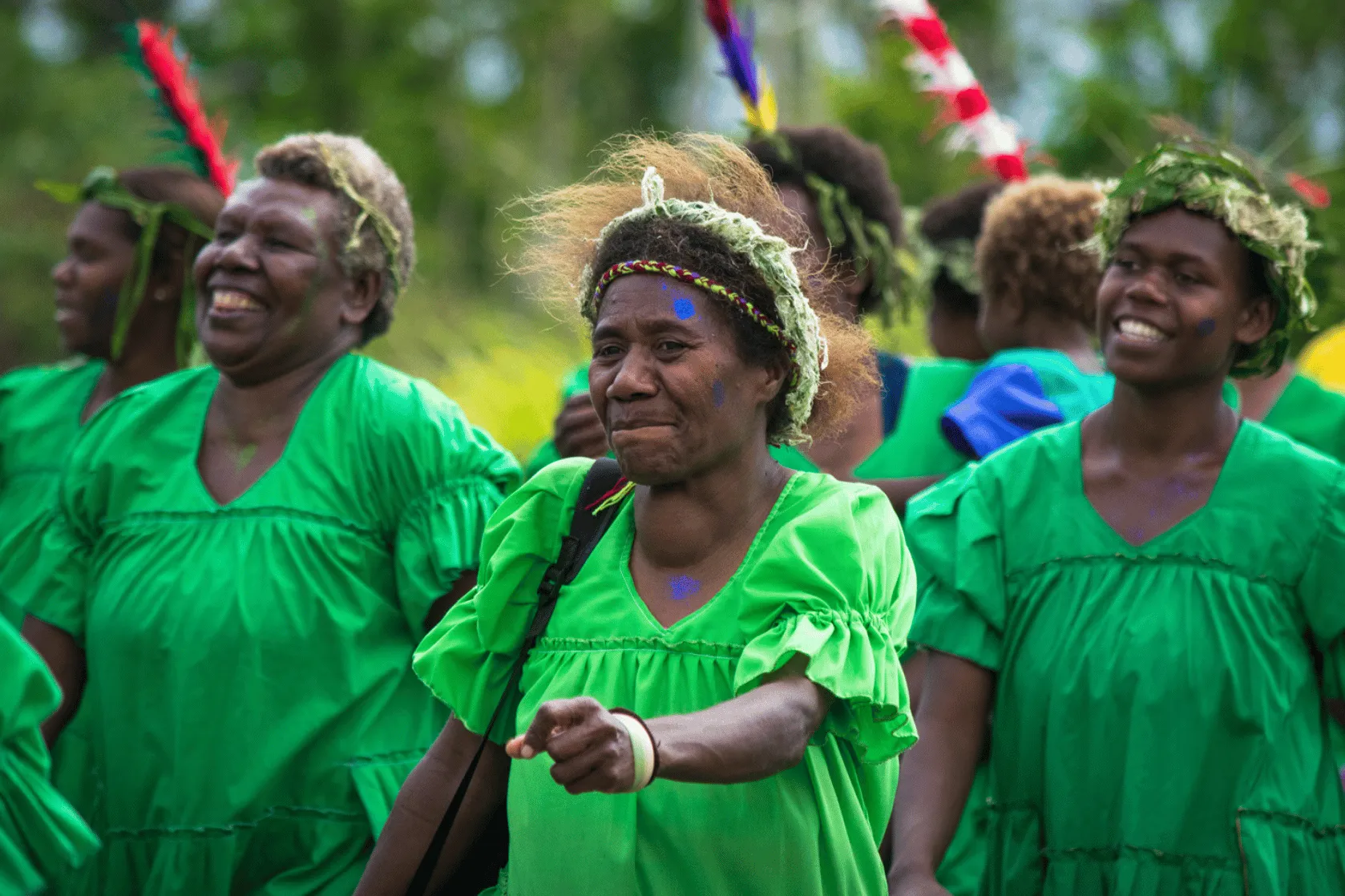
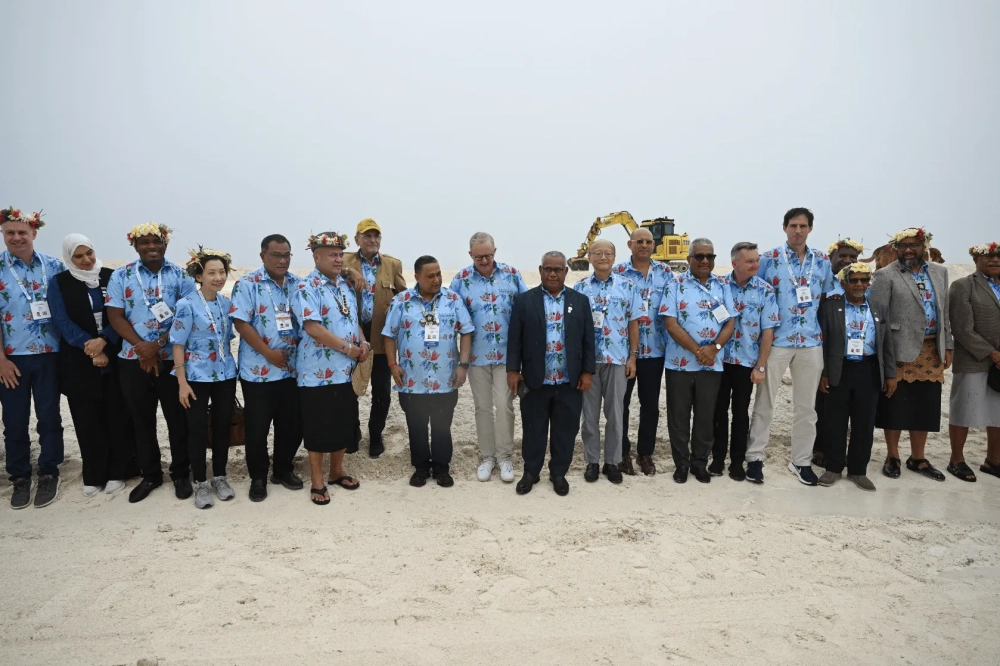
By 2050, women should be playing a leading role in peacebuilding, mediation, and security decision-making. Photo: UN Women Asia and the Pacific/Flickr (CC BY-NC-ND 2.0)
The path to peace and security has been paved by Pacific feminist peacebuilders. What could 2050 look like if we continue to build on their legacy, writes Sharon Bhagwan-Rolls.
By 2050, Pacific Island communities will continue to affirm the legacy of Pacific feminist peacebuilders.
Children will learn about the women whose courage, vision, resistance, and care shaped non-violence and peacebuilding: women who broke bows and arrows amid armed violence and helped nurture the Nuclear Free and Independent Pacific movement.
Communities will honour the women – the Lejmanjuri – who taught peacebuilding long before it had a formal name: our grandmothers, mothers, aunts, sisters, community elders, faith leaders, healers, organisers, and quiet guardians.
Feminism is a vital strand in sustaining inclusive, intergenerational, community-rooted pathways for peace and security.
Regionalism, decolonisation, and Pacific agency
By 2050, more than 70 years of regionalism are reflected in the achievement of 22 Pacific Island independent states.
Our leaders continue to assert Pacific agency, ensuring that the regional architecture reflects Pacific priorities.
Decolonisation has revived and deepened relationships across the Pacific. Community and strengthened education systems that reclaim and enhance traditional knowledge, kastom, and language.
Community-led peace and human security
By 2050, the crises, armed conflict, militarisation, climate disasters, ecological loss, economic injustice, and violence that once connected my generation of peacebuilders and our local struggles have been transformed – and we have a vibrant Pacific Island civil society led peacebuilding and mediation network rooted in solidarity, memory, and action.
We no longer depend on external interventions to define peace for us. Instead, we have strengthened local peacebuilding systems that address the drivers of inequality, insecurity, violence, and exclusion before they escalate.
Leadership is collective, relational, and trusted. It is practiced through listening, mediation, cultural knowledge, care, and solidarity, rather than concentrated in a single institution, state, or individual.
Vibrant and inclusive national peacebuilding and security mechanisms are shaped by community-based women’s networks, church groups, youth advocates, and customary leaders who formally participate in provincial, national, and regional processes.
Security is defined through the intersection of people, peace, and development, shaped by Pacific values and Pacific solutions.
Human security is inclusive and grounded in community, Indigenous and Traditional knowledge, care, justice, human rights, and collective resilience.
Economic justice is experienced, not extracted.
Equality in political participation has been achieved, and women, girls, young people, elders, persons with disabilities, rural and maritime communities, and diverse gender and social groups shape the decisions that affect their present lives and futures.
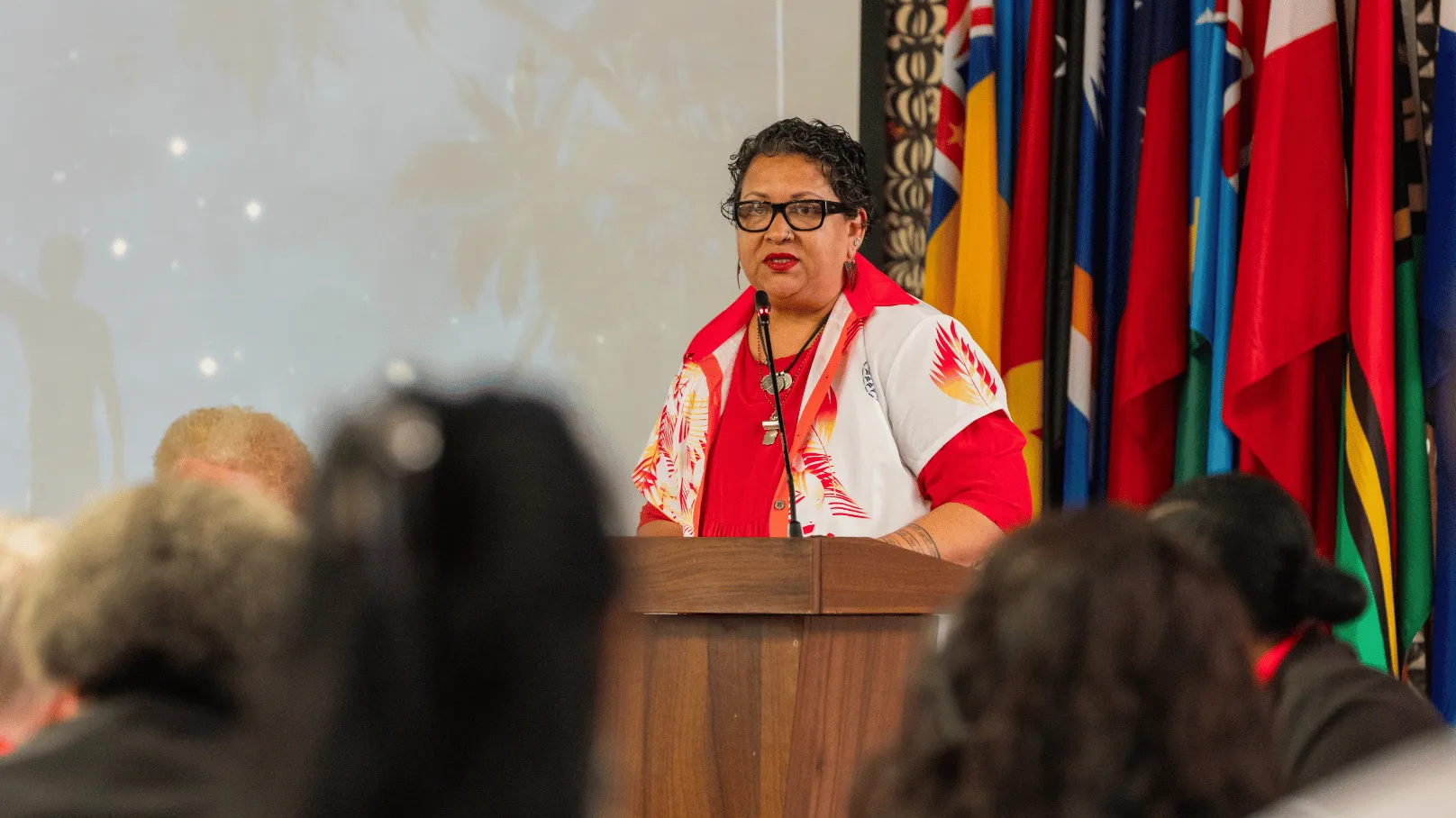
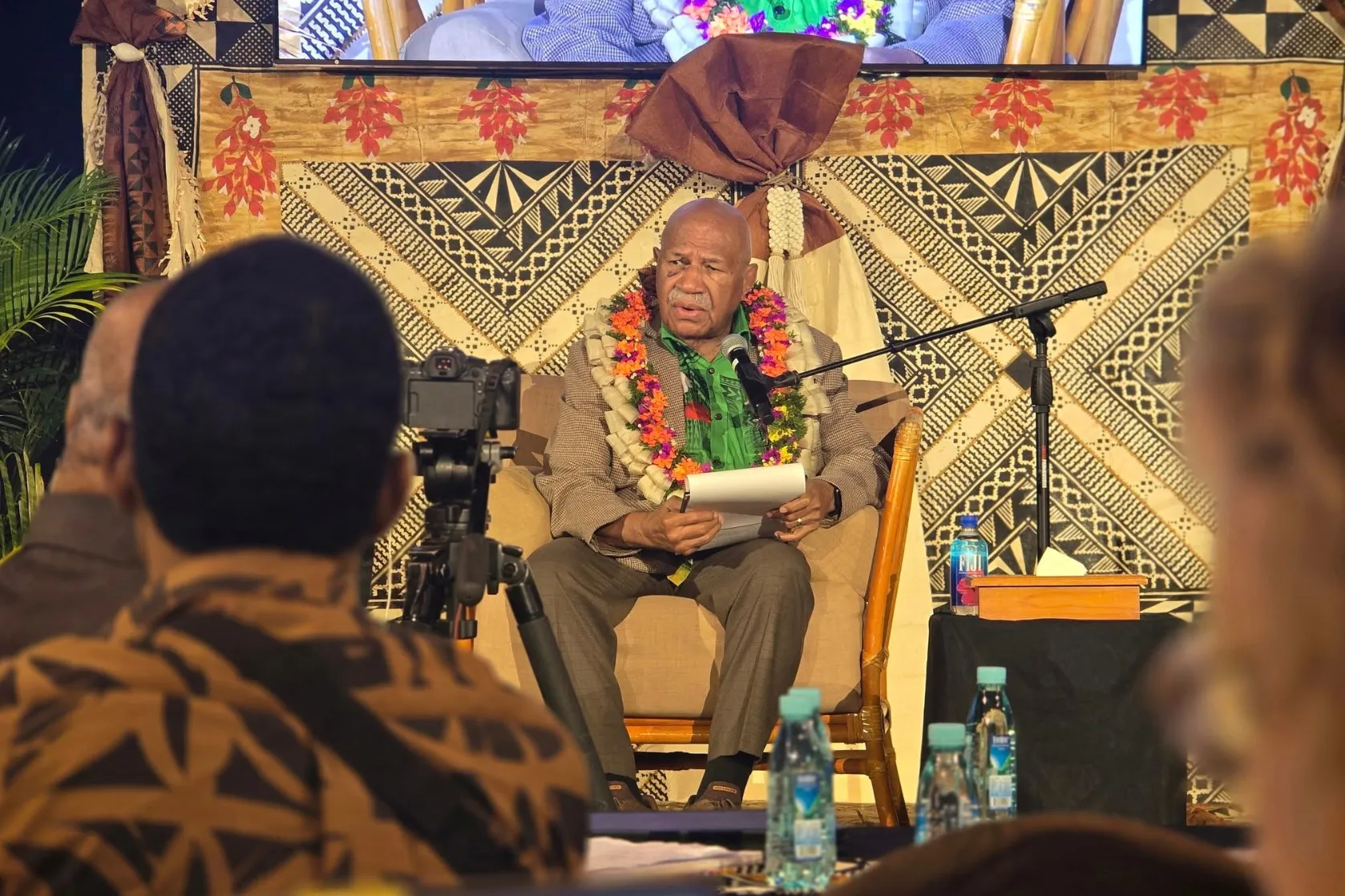
Sharon Bhagwan-Rolls speaks at the Pacific Peace and Security Dialogue. Photo: Pacific Security College
Our Ocean of Peace
By 2050, our Ocean of Peace is lived, practiced, and carried forward in the shared baskets of diverse Pacific Island women, carrying our knowledge, cultures, relationships, spirituality, and everyday survival.
We are a region of peace, harmony, security, social inclusion and prosperity.
Militarised competition does not divide our islands, undermine regionalism, or turn our ocean into a theatre of strategic contest.
Our ocean – a source of identity, survival, relationship, spirituality, and sovereignty – is protected, just as we protect people from violence, displacement, hunger, exploitation, and ecological collapse.
Maritime security is centred on human security, community wellbeing, ecological protection, and the dignity of everyday life: not naval power, not state defence, and not competition over strategic access.
Diplomacy is rooted in self-determination, demilitarisation, ecological care, and the protection of our commons.
Financing feminist peace
Financing is central to this transformation. By 2050, diverse women- and youth-led initiatives, intergenerational peacebuilding learning, and feminist advocacy have secured sustained, flexible, multiyear investment.
At least 0.00037% of 2024 global military spending – more than US$10 million per year – is directed into Pacific women’s peacebuilding, mediation, early warning, climate justice, protection, and movement infrastructure.
This is not charity; it is a peace dividend: a modest reallocation from systems that prepare for war toward systems that prevent violence, sustain communities, and protect the living planet.
This investment includes fully funded and sustainable health care, trauma healing, and humanitarian justice for island communities affected by nuclear testing in the Marshall Islands, Kiribati, French Polynesia, and Fiji.
Ecological justice and liberation
A climate, biodiversity and ecological justice, peacebuilding and human security agenda is indivisible from and shaped by the 17 Urgent Demands of Pacific Feminists Defending the Living Planet (2025).
In 2050, we have systems well and truly in place – woven of gender, economic and social justice, and human rights to protect Pacific people, lands, and oceans – dismantled from patriarchy, racism, colonialism, coloniality, heteronormativity, class oppression, and extractive economies.
We have prioritised liberation: no longer commodifying land, water, labour, bodies, or the atmosphere, but advancing people-led, intersectional, and interlinked systems across all territories, with Indigenous and First Nations peoples prioritised in the pursuit of liberation.
Shared power and inclusive leadership
By 2050, the Blue Pacific Ocean of Peace Declaration not only affirms the call for a Zone of Peace in the 1994 Pacific Platform for Action; it has become the foundation for equitable societies in which all genders can thrive through feminist financing, inclusive policymaking, and the full participation of diverse and historically marginalised voices in leadership and future-building.
As envisioned by Solomon Islands members of our network, gender equality is made real through equal access to quality education, stronger economic and political opportunities for women, legal reforms, and cultural change that values women’s leadership.
Women play a leading role in peacebuilding, mediation, and security decision-making, with at least 30% representation and progress toward equal participation. Intergenerational dialogue bridges traditional knowledge and feminist perspectives, while sustained gender-responsive financing supports women-led initiatives and community resilience. In climate-affected communities, women leaders prevent conflict by convening dialogue and ensuring that women, youth, and marginalised groups are included in decisions about water, food, relocation, and resources.
A regional peace and security action plan on gender, peacebuilding and security has transformed participation into shared power by changing who sets agendas, defines security, and makes decisions.
It has expanded security to include safety, dignity, climate resilience, food and water security, freedom from violence, protection of land and ocean, and strong community relationships.
Pacific women mediators are actively leading at local, national and regional levels.
A future carried across generations
By 2050, my grandson Aadarsh will be approaching his 30th birthday. His name, in English, means ideal or aspiration. My hope is that he has inherited a Pacific where customary dialogue, spiritual leadership, storytelling, relational accountability, women’s organising, and community-based conflict prevention are strengthened through intergenerational leadership, mentorship, succession, and shared authority.
He lives in a Pacific where governments, civil society organisations, faith-based organisations, communities, and traditional and customary leaders work together for equality, inclusive development and peace.
This is the feminist future I work for: a future where financing gender justice is unquestioned; where steady, equitable, and flexible resources reach Pacific Island-led women’s and human rights organisations; where decolonial and intersectional representation uplifts diverse voices across race, class, ethnicity, geography, disability, sexuality, age, and gender; and where diverse young women leaders and girls no longer struggle for the right to speak or lead on the frontlines of climate justice, bodily autonomy, and peace.
In 2050, the table has been redesigned. The mat has been rewoven.
Our Ocean of Peace nurtures and sustains us all.
Sharon Bhagwan-Rolls is the Network Coordinator of the Pacific Women Mediators Network. This speech was delivered at the 2026 Pacific Peace and Security Dialogue.
Views expressed via the Pacific Wayfinder blog are not necessarily those of the Pacific Security College. Read our publishing policy.