Remembering the Pacific’s nuclear legacy amid today’s vision for peace

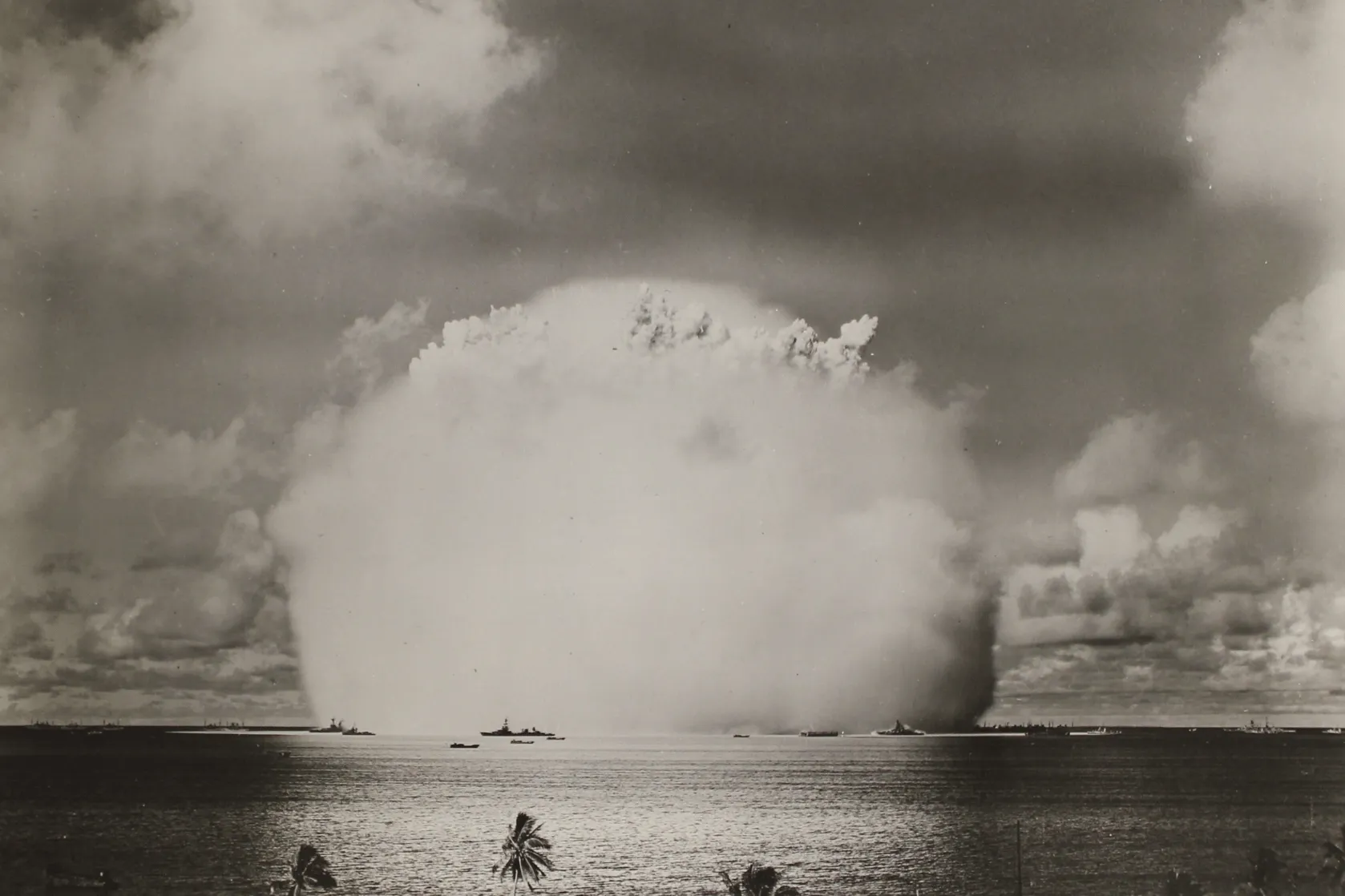
An atomic cloud rises from the explosion in Bikini Atoll in the Marshall Islands on 1 July 1946. Photo: National Archives of the United States (6234450)
At a time of heightened geopolitical tensions, the Pacific’s nuclear history is a reminder the impacts of nuclear activity are not confined to the past, writes Vehia Wheeler.
On 1 July 1946, the first nuclear bomb, codenamed Able, was detonated on Bikini Atoll in the Marshall Islands by the United States (US). This year marks 80 years since this explosion.
On 3 July 1966, the first nuclear bomb, codenamed Aldebaran, was detonated on Moruroa atoll in Mā’ohi Nui/French Polynesia by the French state. This year marks 60 years since this first explosion.
Since 1946, July has been a month to commemorate the fundamental change, shock and societal upheaval that occurred in the Pacific following the start of nuclear testing.
After those initial tests, nuclear explosions continued in the Marshall Islands, expanded to Malden and Kirimati (Christmas) Island in Kiribati by the United Kingdom (UK) and US, Kalama (Johnston) Atoll in Hawai’i by the US, Montebello Islands, Emu Field and Maralinga in Australia by the UK and in Mā’ohi Nui/French Polynesia by France.
The Pacific has endured more than 300 nuclear explosions on our islands, atolls, ocean and people. The last nuclear weapon detonated in the Pacific was 30 years ago – conducted by France in 1996 on Moruroa atoll. There were cries of injustice, nuclear imperialism and resistance from the Pacific and worldwide before, during and after this time.
This month and these dates remain relevant to the communities that still face long-standing and unresolved impacts.
We continue to demand nuclear justice. We demand to understand the full truth of past consequences and harm, and the freedom to speak and learn about this past. Nuclear testing sites are often off-limits, military archives were classified for decades, and some still are. Therefore, the history of what exactly occurred on these sites can be a mystery to those affected.
We also continue to require appropriate healthcare for our populations, as nuclear exposure has increased illnesses and sicknesses in our people. Radiation-induced illnesses can include numerous cancers, women’s health issues such as endometriosis or miscarriages, and mental health issues. Environmental care, attention and remediation for the impact of nuclear radiation on our lands and ocean also needs to be addressed. The radioactive debris from the Marshall Island tests was put under a dome called Runit Dome, which now is deteriorating and potentially leaking radioactive debris into the ocean.
We try to move forward on these issues, often times with little accountability or support from those very perpetrators who conducted these nuclear weapons tests.
It is important to commemorate these dates for our Pacific collective memory; to remember a time when our ocean was sacrificed for the military advancement of powerful countries. This is a time to honour and show care and solidarity for our shared ocean and peoples. It is also a time to acknowledge our collective efforts to stop these bombs. With years of work, regional solidarity and international support, we were able to do so.
As part of this nuclear legacy, 2026 also marks the 40-year anniversary of the Treaty of South Pacific Nuclear Free Zone (SPNFZ), also known as the Treaty of Rarotonga. The treaty entered into force in December 1986 and was a groundbreaking regional pact, a way to insulate and protect our region by 17 Pacific nations coming together to block the use of nuclear weapons in our shared waters. This powerful example of Pacific agency and multilateralism should also be commemorated and never forgotten.
In our current context, with a renewed discourse of Pacific peace and security, such as the Blue Pacific Ocean of Peace Declaration endorsed in 2025, peace needs to mean preventing nuclear and military posturing that could lead to sacrificing our ocean again.
The region’s nuclear history shows that the Pacific Ocean and Pacific peoples have already been used as guinea pigs for another country’s security agenda. This era remains relevant for our Pacific collective memory.
It is also an ongoing legacy that offers perspective and lessons during a time of heightened geopolitical tensions in the Pacific and varying visions and agendas of security entering the region.
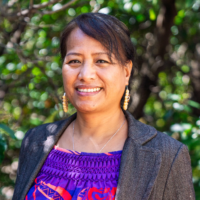
Vehia Wheeler is a Mā’ohi researcher and an Environmental and Cultural Consultant with Sustainable Oceania Solutions.
Views expressed via the Pacific Wayfinder blog are not necessarily those of the Pacific Security College. Read our publishing policy.




Ngā mihi ki a koe. Lest we forget. X