In the face of fragmentation, shared values are our compass to a secure Pacific


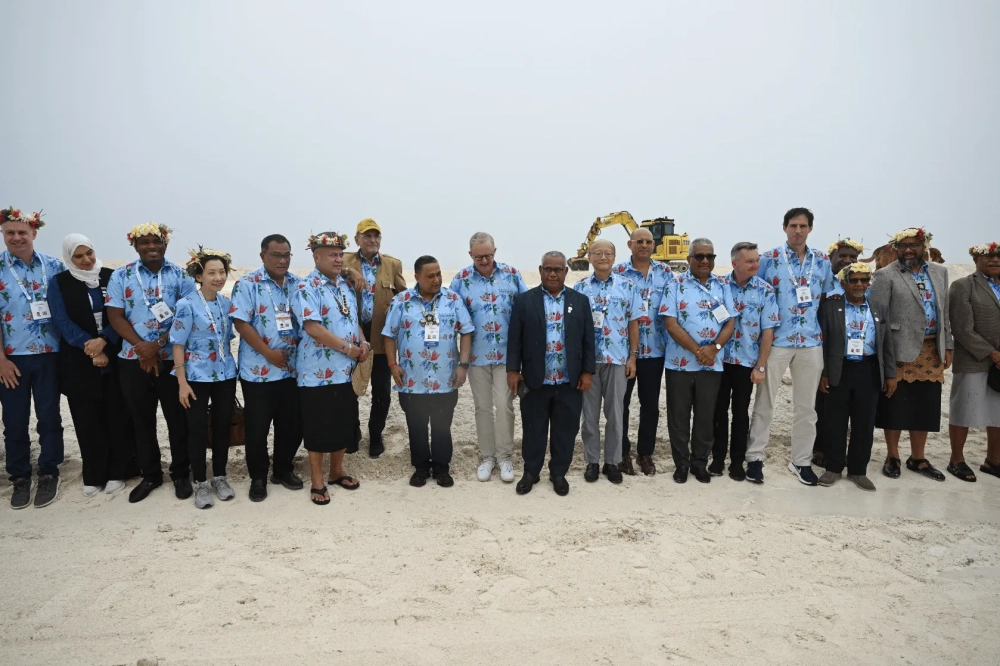
The Hon Simon Kofe addresses the Pacific Peace and Security Dialogue. Photo: Pacific Security College
The 2050 Strategy for the Blue Pacific Continent reminds us that security is not an end in itself, but part of a future we are deliberately shaping, one grounded in our shared values, identity, wellbeing, and responsibility to future generations, writes the Hon Simon Kofe.
The 2050 Strategy for the Blue Pacific Continent is often described as a development strategy, but at its heart it is a values-based vision for our region.
What makes it distinctive is that it begins not with economics, infrastructure, or trade, but with our people, cultures, and identities. It recognises that development is ultimately a means of safeguarding the values that define us as Pacific peoples.
These values include stewardship of our environment, respect for one another, collective responsibility, solidarity, reciprocity, and a commitment to the wellbeing of present and future generations. They are values that have sustained Pacific societies for centuries and that continue to shape how we understand leadership, governance, development, and our relationships with one another. Particularly, our Pacific value of collective responsibility and collectivism has often guided and moulded us as a stronger region.
In this sense, our values are more than aspirations. They are the compass that guides our decisions and informs the systems we build. The question before us, therefore, is not simply how we respond to security threats, but whether we have the wisdom and conviction to allow our values to guide our collective response to an increasingly complex and uncertain future.
Our ancestors faced their own uncertainties. They crossed vast oceans in small vessels, navigating unfamiliar waters, changing weather, and unknown horizons. Yet they did so with courage, wisdom, and an unwavering belief that beyond the sikulagi – the horizon – lay opportunity and a better future for their people.
They were guided by the knowledge, values and traditions passed down through generations. Today, as we confront new challenges, from climate change and transnational crime to technological disruption and geopolitical competition, we are called to demonstrate that same resolve. The horizon before us may look different, but the compass remains the same.
The challenges confronting our region today are not merely technical or policy challenges. They are, in many respects, tests of leadership, tests of institutions, tests of unity and ultimately tests of values.
Climate change, for example, is often described as an environmental crisis. But at its core, it is also a crisis of values and ethics. It forces us to confront questions of responsibility, stewardship, intergenerational justice, and our obligations to those who are most vulnerable. It asks whether our responsibility to future generations will prevail over short-term interests. It also highlights the necessity of unified global solutions.
Transnational crime presents a different challenge. It is not only a test of law enforcement capacity. It is a test of the integrity of our leadership, systems and institutions. Criminal networks thrive where governance is weak, where information is not shared, where borders are poorly coordinated, and where public trust is eroded. The success of these networks often depends not on their strength, but on our fragmentation.
While climate change and transnational crime may appear very different, both reveal the same underlying lesson. Climate change exposes the costs of fragmented global action. Criminal networks exploit fragmented national responses. In both cases, our vulnerability is often found not in the threat itself, but in the gaps between us.
Likewise, technological disruption and geopolitical competition challenge our judgement, our resilience, and our ability to remain anchored to our values and each other while adapting to a rapidly changing world.
Viewed through this lens, the question is not simply whether we can respond to these challenges. The question is whether the values we proclaim are sufficiently strong to shape the systems we build and the decisions we make.
For if values are the compass of the Blue Pacific, then our institutions, policies, and regional arrangements are the vessels with which we navigate. One without the other is inadequate.
Regionalism in an interconnected world
In Tuvalu, we are taught from an early age that membership in a family comes with responsibilities. We are expected to contribute, to show respect, to exercise discipline, and to place the wellbeing of the collective alongside our own interests. Similar values can be found across the Pacific, expressed differently in different cultures, but reflecting a common understanding that individual wellbeing is inseparable from the wellbeing of the community.
I believe these same principles can be elevated beyond the national level to the regional level. Because regionalism is not simply a political arrangement. It is the application of Pacific values at a larger scale.
But the environment we are operating in today forces us to go further in our reflection. The challenge is no longer simply whether we cooperate. The challenge is whether our cooperation is structured in a way that prevents fragmentation from weakening us.
Fragmentation is now one of the most persistent strategic vulnerabilities facing our region. It appears in differences in rules and standards, in uneven enforcement across jurisdictions, and in the ability of external players, whether criminal networks, commercial interests, or geopolitical actors, to exploit these gaps. Fragmentation rarely announces itself as a threat. Yet over time it erodes effectiveness, weakens resilience, and diminishes our collective influence.
This is where we can draw useful lessons from the experience of the Parties to the Nauru Agreement or the PNA. Formed to manage fisheries, specifically for skipjack tuna, the PNA recognised that fisheries could never be simply a national matter in the Pacific due to the movement of fish across national maritime boundaries.
I do not suggest that the PNA is a perfect model, nor that its arrangements can be directly transplanted into other areas. Rather, its significance lies in the values and principles that underpin it. By examining those foundations, we can identify patterns of success that offer useful insights for how we approach security challenges across our region.
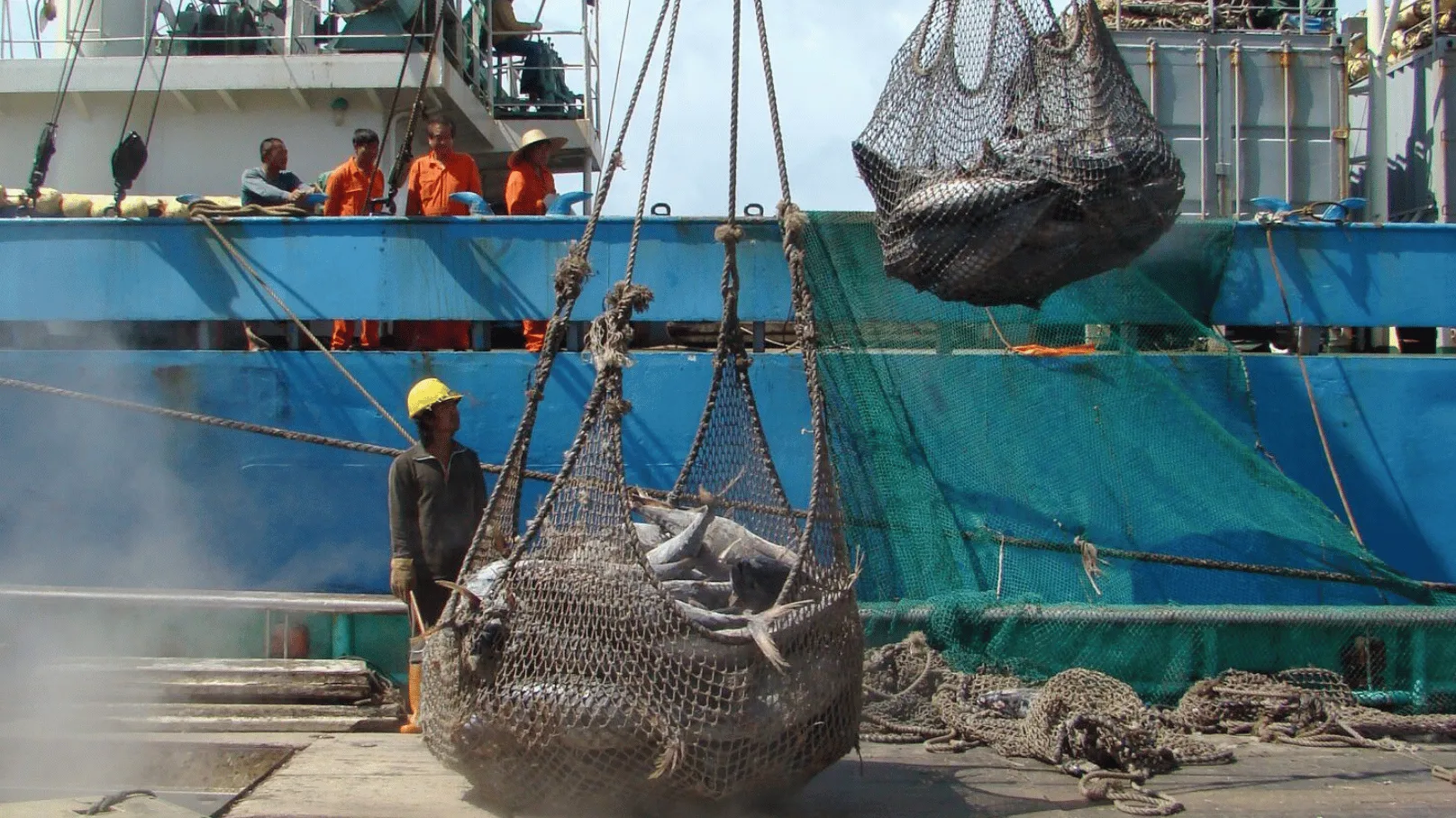
The Parties to the Nauru Agreement holds lessons that can expand before fisheries. Photo: Parties to the Nauru Agreement Tuna (Facebook/PNA Tuna)
The success of the Parties to the Nauru Agreement was not simply the result of cooperation. It was the result of deliberate choices made to harmonise conservation and management measures, coordinate access arrangements, establish common benchmarks, strengthen enforcement, and share information. In doing so, the PNA reduced the ability of external actors to exploit differences between states and strengthened their collective position.
Most importantly, the PNA demonstrated that in an interconnected world, sovereignty is often strengthened, not diminished, when states act collectively. The Parties to the Nauru Agreement increased their strategic influence by aligning their efforts around common rules, shared responsibilities, and a unified purpose.
That lesson extends far beyond fisheries. It has relevance for aviation, labour mobility, border management, maritime surveillance, immigration, cybersecurity, and regional security cooperation. In each of these areas, fragmentation creates vulnerability, while coordination creates strength.
We are already beginning to see this principle reflected in emerging regional initiatives such as the Pacific Blue Shipping Partnership, which was formally established in the Republic of the Marshall Islands just last week. The Partnership works alongside Pacific Transport Ministers to advance the decarbonisation of domestic shipping across the region and catalyse large-scale climate finance investment to transition to low carbon shipping.
While focused on maritime transport, its significance extends beyond shipping itself. It represents a recognition that many of the challenges facing our region can no longer be addressed effectively through isolated national responses alone. By pursuing common standards, shared objectives, and coordinated action, Pacific countries are demonstrating how regional cooperation can strengthen resilience while respecting national sovereignty.
This is why regionalism must be understood as more than an aspiration. In an increasingly interconnected and contested world, it is becoming a practical necessity for safeguarding both our interests and our independence.
Navigating the Blue Pacific future
The 2050 Strategy challenges us to think beyond immediate pressures and short-term responses. It asks us to consider what kind of region we are building, what values will guide it, and what responsibilities we owe to those who will inherit it.
Security therefore cannot be measured solely by the absence of conflict or the strength of enforcement institutions. True security is found in resilient communities, trusted institutions, effective governance, environmental stewardship, and a region capable of acting collectively when confronted with shared challenges.
The Pacific has never lacked courage. Our history is proof of that. The question before us is whether we can match that courage with the discipline, foresight, and unity required to navigate the challenges of this century.
Our ancestors understood that survival at sea depended on more than a destination. It required a clear sense of direction, confidence in the vessel, trust among the crew, and the wisdom to adapt to changing conditions without losing sight of the horizon. The same is true for our region today.
The compass remains our values.
The vessel is the system of institutions, partnerships, and regional arrangements we build together.
The voyage is the future of the Blue Pacific.
And the test before us is whether we have the leadership to ensure that our values are not merely spoken, but translated into the systems, decisions, and actions that will carry our peoples safely through the uncertainties ahead.
If we succeed, future generations will inherit more than secure borders, stronger institutions, or greater prosperity. They will inherit a region that remained true to its values when those values were tested most severely.
The Hon Simon Kofe is Tuvalu’s Minister for Transport, Energy, Communication and Innovation. This keynote speech was delivered at the 2026 Pacific Peace and Security Dialogue.
Views expressed via the Pacific Wayfinder blog are not necessarily those of the Pacific Security College. Read our publishing policy.