Investment in information resilience is needed to protect trust in the Pacific

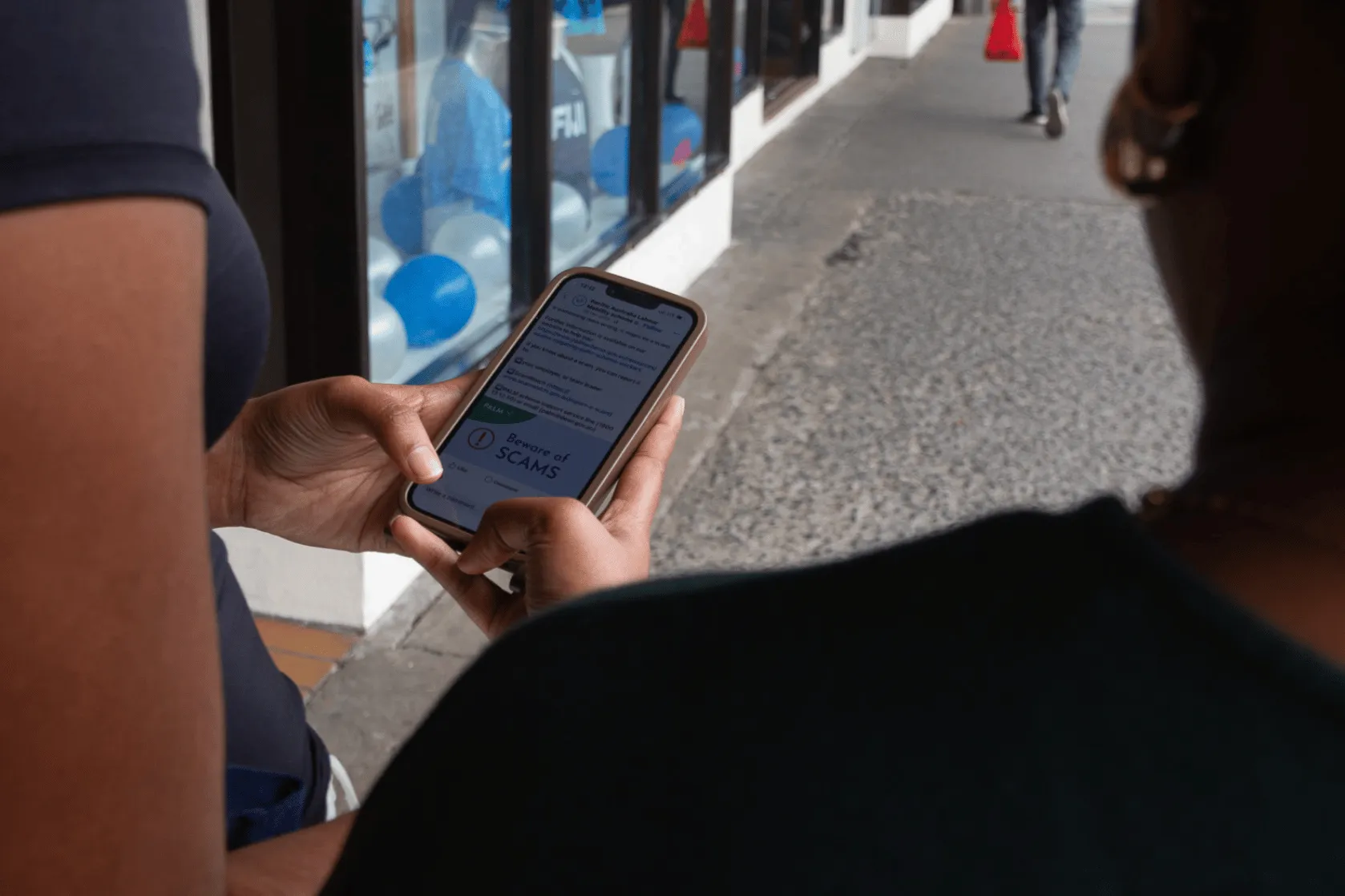
The evolving information environment in the Pacific brings opportunities but also vulnerabilities. Photo: Pacific Security College/ACME Photography/Viniana Bau
Investment in information infrastructure needs to be matched by investment in the people and institutions using it, writes Blake Johnson.
The Pacific information environment is evolving rapidly. Expanded connectivity, social media use, undersea cable investment and the emergence of AI tools are transforming how Pacific communities access, share and shape information.
This transformation brings major opportunities for economic participation, access to services, education and regional connection. But it also creates new vulnerabilities. Better connectivity brings greater exposure to scams, impersonation or misleading and harmful information.
In a new policy paper published by the Pacific Security College, Information resilience: the new frontier for Pacific Cooperation, I argue that information resilience should become a regional priority alongside climate and digital resilience.
We’re seeing a rise in false information, AI-generated content such as the impersonation of politicians and other public figures, and increasingly sophisticated cyber scams. These often have immediate real-world consequences, but they also slowly erode trust. People don’t know what to believe.
A Pacific Information Resilience Statement would provide a practical starting point, setting shared priorities for cooperation and guiding support from international partners.
At its core, this proposal is about protecting trust.
Governments need trust to communicate during disasters. Communities need it to identify credible advice. Democracies depend on it to maintain confidence in elections and institutions. When we can no longer distinguish reliable information from manipulation, the consequences extend well beyond what happens on our phones.
Geopolitics is part of this picture, but it should not determine the whole response. As Royal Oceania Institute chief operating officer Fane Fakafanua observes in the paper: “False information regarding foreign partnerships and geopolitics is seen everywhere in the Pacific region but it’s often not the largest threat to Pacific people.”
The threats are already familiar. Fake recruitment schemes exploit people looking for work. Impersonation scams misuse the names and images of leaders and public figures. Manipulated political content creates public anger and damages reputations. Some incidents cause immediate financial loss. Others gradually undermine confidence in the institutions and relationships that communities rely upon.
Information resilience means equipping societies, institutions and individuals to anticipate, withstand, adapt to and recover from all kinds of harmful or misleading information. It requires sustained investment across three connected areas: media and communication pathways, community protection, and sovereignty and self-determination.
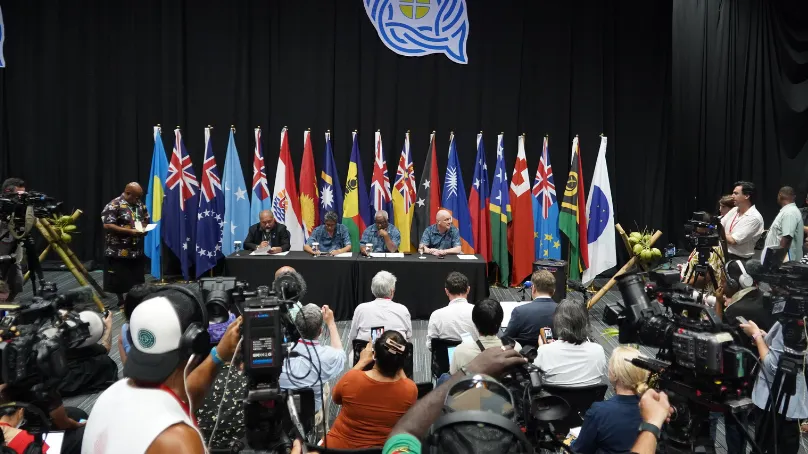
Pacific Islands Forum troika leaders at the final press conference of the 55th Pacific Islands Forum Leaders Meeting in Koror, Palau. Photo: TMC Palau/Pasifika TV
First, the region needs stronger, more sustainable media and better communication between journalists and governments. These relationships are essential to maintaining public trust as technology changes how information is produced and shared.
But training alone will not resolve the pressures facing local newsrooms. In-depth Solomons co-founder and editor Ofani Eremae makes this clear in his contribution: “We need more than short-term training workshops; we need institutional sustainability.”
That means supporting independent, public-interest journalism, verification skills and reporting in local languages. It also means recognising that media organisations need resources to retain staff and apply the skills they acquire.
Second, community protection requires practical digital literacy that reaches people through institutions and voices they already trust. Schools, churches, women’s networks and community leaders should help shape how this support is delivered. Awareness campaigns need to explain how to recognise suspicious content, where to report scams and what to do when something goes wrong.
Third, information resilience supports sovereignty. Pacific governments and communities should be able to make decisions using accurate, locally grounded information. Foreign information manipulation can distort those decisions, but protecting sovereignty also requires care in how governments respond. Broad restrictions on speech or media can weaken the trust that resilience depends upon.
A regional statement would give these efforts a shared direction. Countries could exchange lessons from elections and emergencies, coordinate training, strengthen reporting pathways and identify emerging threats earlier. National approaches would still reflect different circumstances and capabilities.
It would also give partners clearer guidance. Sustained support for Pacific-defined priorities would be more useful than disconnected projects responding to each new incident or technology. Existing institutions and programs provide foundations to build upon.
A statement will not stop scams or restore trust overnight. Its value would depend on the cooperation, resources and accountability that follow.
But the Pacific has repeatedly demonstrated the value of collective action. Bringing that same commitment to the information environment would help ensure that greater connectivity strengthens communities, protects independent decision-making and gives people greater confidence in whom they can trust.
Pacific leaders must address the information challenge if they want to take the lead in shaping the region’s information future.
Blake Johnson is a security and development expert with more than a decade of experience in Australia and the Pacific.
Views expressed via the Pacific Wayfinder blog are not necessarily those of the Pacific Security College. Read our publishing policy.